DEEP TIMEA SCROLLABLE HISTORY OF THE PLANET

Evolutionof theEarth

From molten rock to dinosaurs to the first cities — 4.56 billion years of planetary history laid out in unbroken sequence. The chronometer is running.

CHAPTER ITHE HADEAN EON

Shaping the World

A dead star's dust becomes a planet, a rogue world becomes our Moon, and it rains for a thousand years.

4.56 BILLION YEARS AGO4 BILLION YEARS AGOIN THIS CHAPTER: 560 MILLION YEARS

COSMOS

A Star Dies, and Everything Begins

Nine billion years into the universe, an old star exploded. Its dust collapsed into a new sun — and into you. Every atom in your body was made inside a star.

PLATE Nº 01

The solar nebula — a dying star's dust cloud collapsing
PLATE Nº 01 — The solar nebula. Star-dust, and everything to come. — Source: Lord Rosse's sketch of the Whirlpool, 1845 · public domain
PLATE Nº 02
Accretion — molten baby Earth gathering rock from the disc
PLATE Nº 02 — Accretion. Sweeping up the debris of the early solar system. — Source: A. Vollmy, the 1833 Leonid storm · public domain
GEOLOGY

Dust Becomes a World

Dust around the young Sun stuck together — pebbles, boulders, then worlds. One of them, still glowing hot, became Earth.
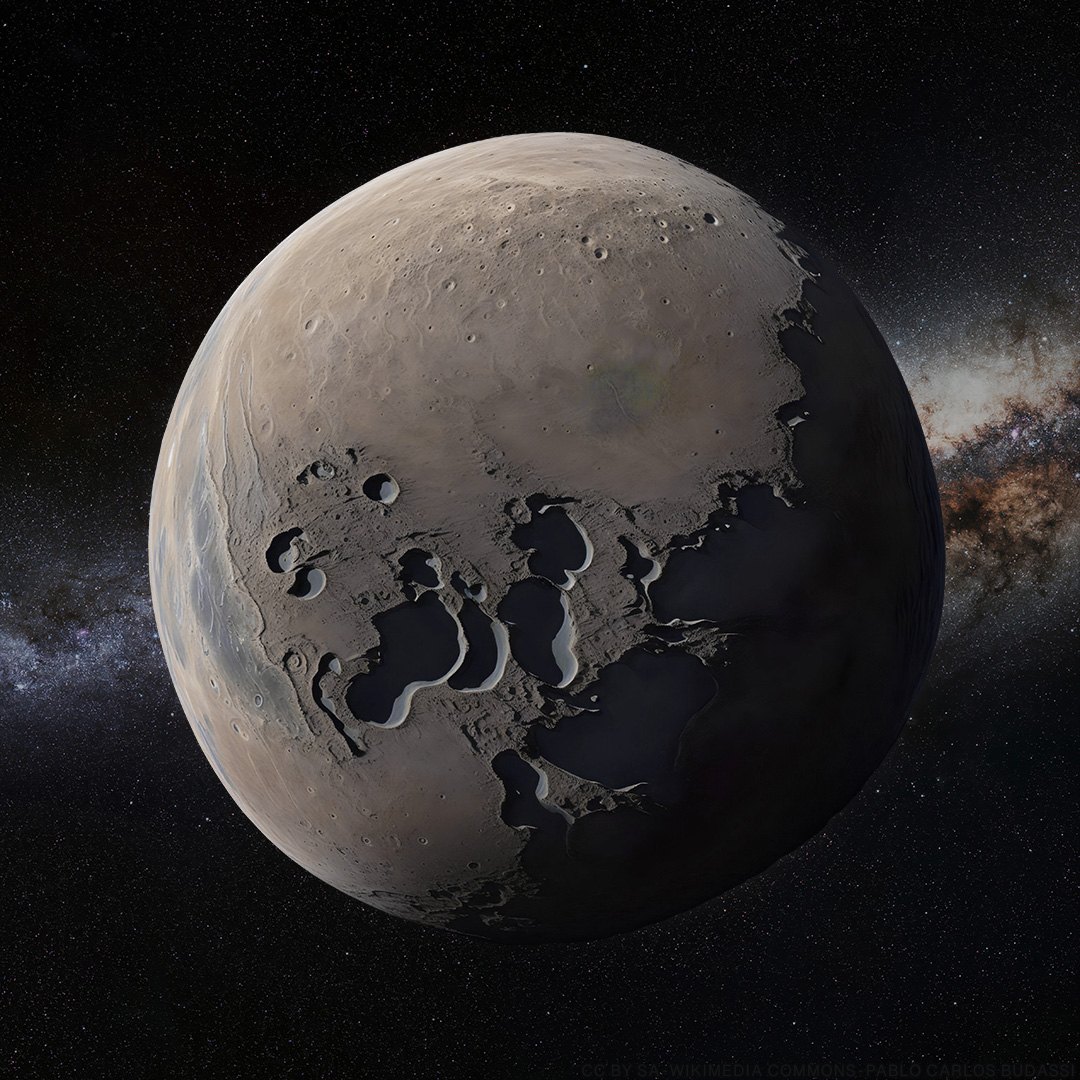
PLATE Nº 03A young world still molten, still gathering its ring of debris
PLATE Nº 03 — The giant impact. Earth survives; Theia does not; the Moon is the child of both. — Source: Pablo Carlos Budassi · CC BY-SA 4.0
COSMOS

A Second Planet Hits the First

A Mars-sized world called Theia struck the young Earth. The wreckage sprayed into orbit and clumped into the Moon — maybe within a single year.

GEOLOGY

It Rains for a Thousand Years

The crust cooled, and the sky rained for a thousand years. The oceans filled. Tiny zircon crystals in Australia still remember.

PLATE Nº 04
The Hadean world — black crust, magma seams, endless rain
PLATE Nº 04 — The Hadean sky opens. Hades: the eon was named for hell. — Source: 19th-century cyclopædia engraving · public domain
COSMOS

The Late Heavy Bombardment

The giant planets shifted and hurled a storm of asteroids inward. Earth and the Moon took the hits — the Moon's craters are the scars.

CHAPTER IITHE ARCHEAN EON

The First Spark

Chemistry learns to copy itself, and the smallest creatures begin the biggest engineering project ever attempted.
4 BILLION YEARS AGO2.5 BILLION YEARS AGOIN THIS CHAPTER: 1.5 BILLION YEARS

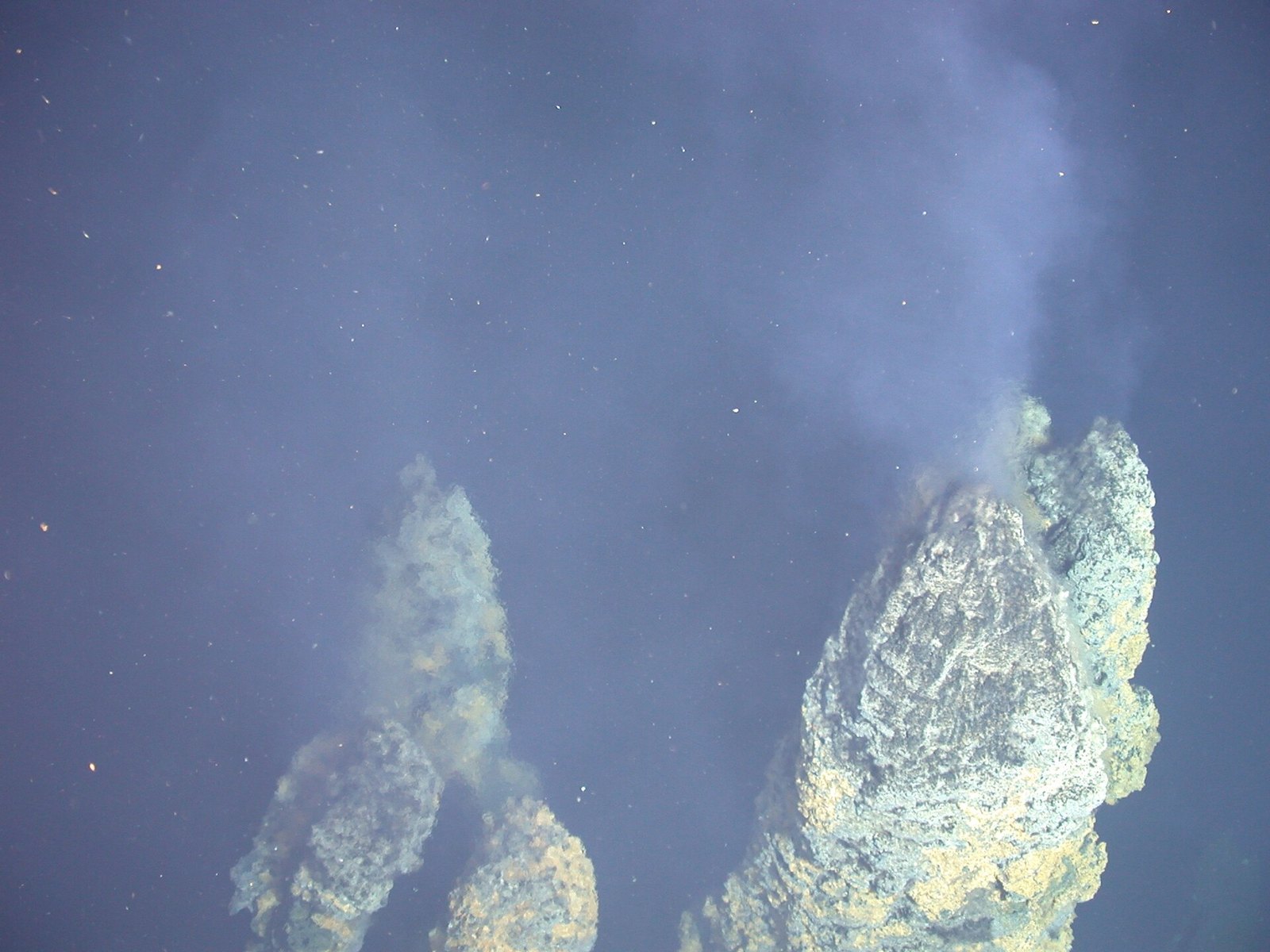
PLATE Nº 05A deep-sea hydrothermal vent with the first microbes
PLATE Nº 05 — Black smokers: a leading candidate for life's first address. — Source: NOAA Vents Program · public domain
BIOLOGY

Life. Just Like That.

Almost as soon as the planet calmed down, chemistry started copying itself. Life had begun — and everything alive today descends from that moment.

BIOLOGY

The First Architects

Bacteria built layered stone mounds — stromatolites. Their relatives are still building them in Australia, 3.5 billion years on.
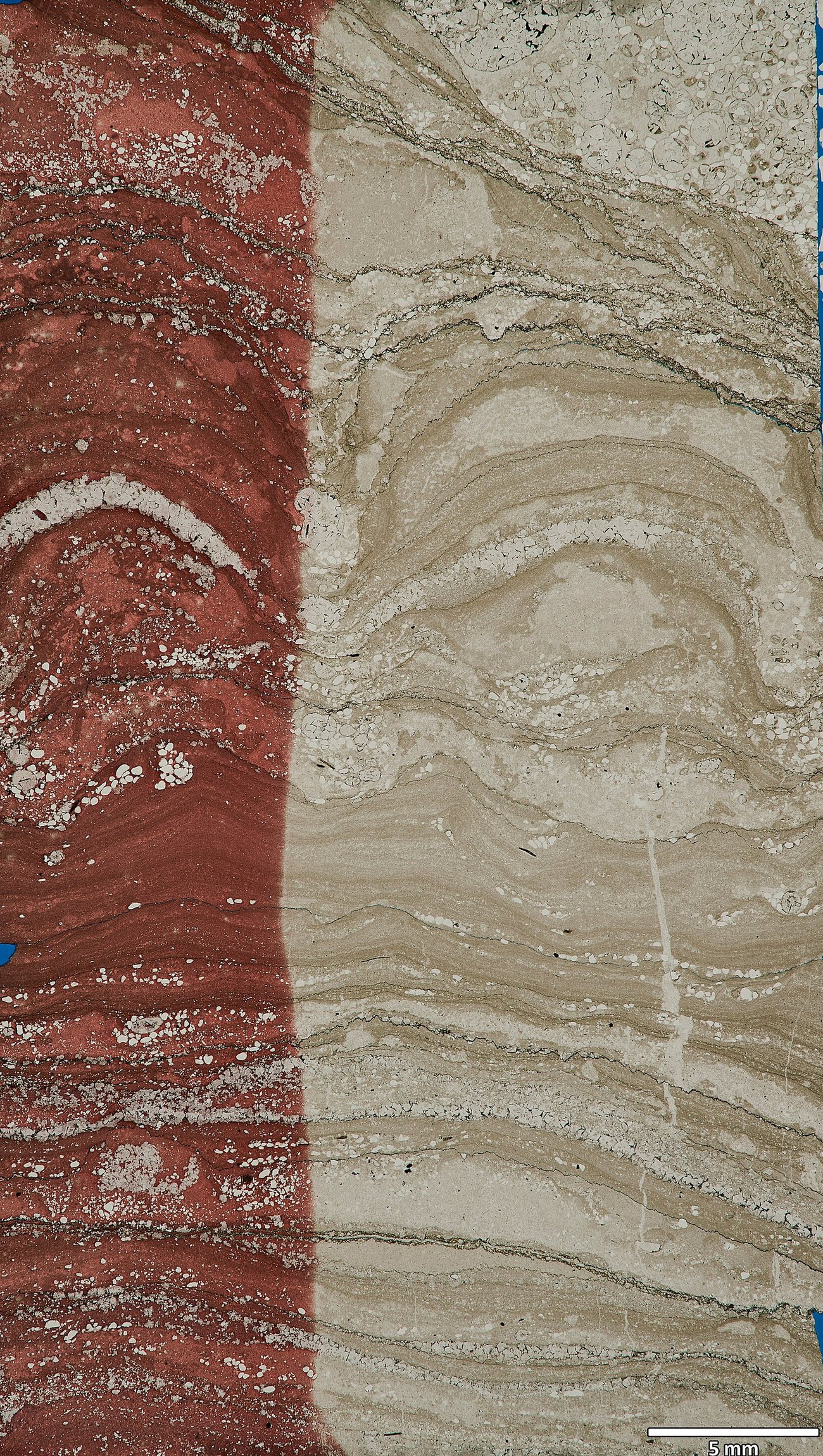
PLATE Nº 06A fossil stromatolite in cross-section — every band a generation
PLATE Nº 06 — A stromatolite, sliced: layer upon layer of bacterial builders. — Source: Michael C. Rygel · CC BY-SA 4.0
BIOLOGY

Learning to Eat Sunlight

Cyanobacteria invented photosynthesis — and burped out oxygen as waste. The fuse of a planetary revolution was lit.

CHAPTER IIITHE PROTEROZOIC EON

The Long Wait

The sky turns blue, the planet freezes solid — twice — a cell swallows a cell, and sex is invented.
2.5 BILLION YEARS AGO541 MILLION YEARS AGOIN THIS CHAPTER: NEARLY 2 BILLION YEARS

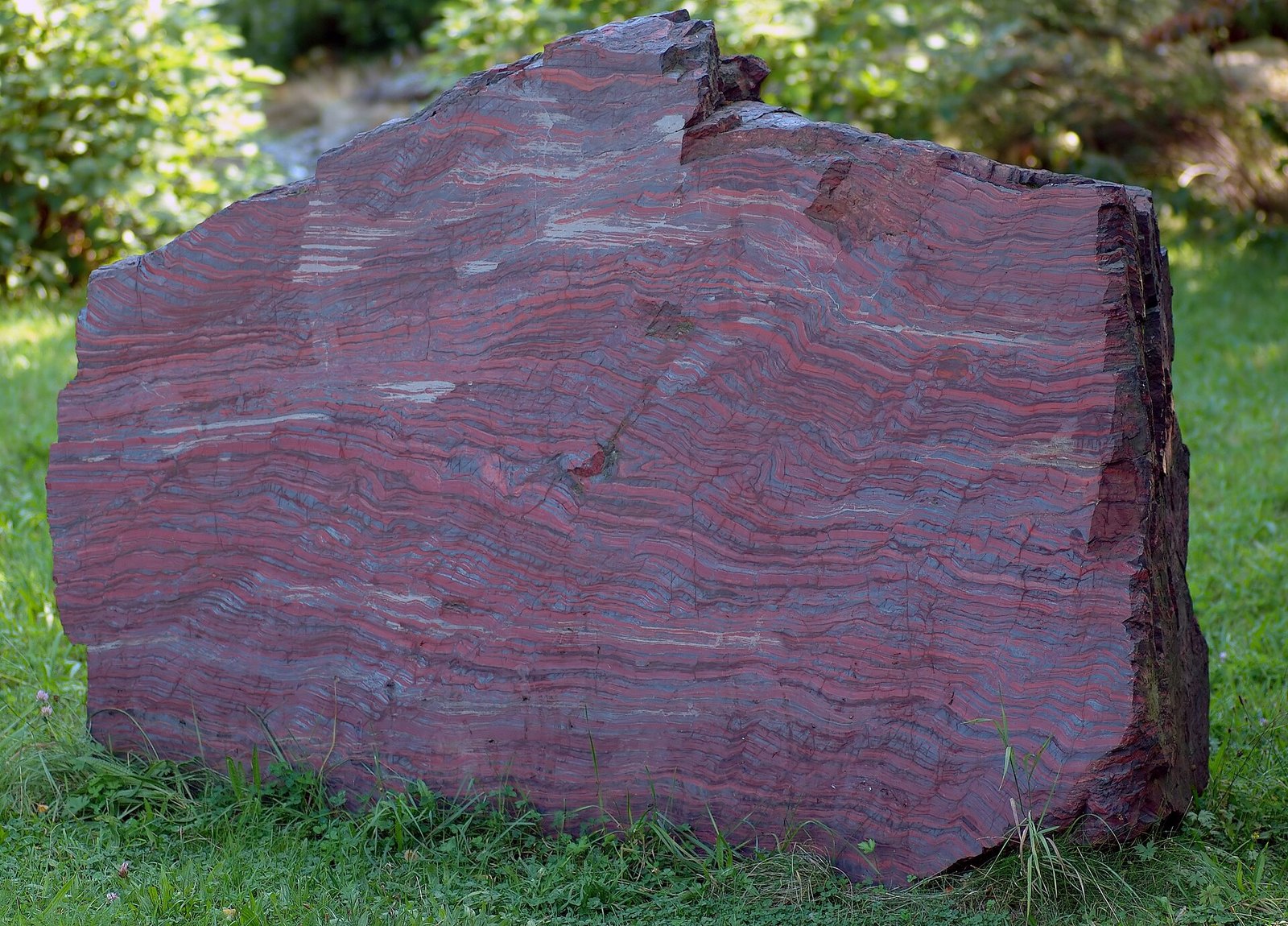
PLATE Nº 07Cyanobacteria mats and rust-red banded iron cliffs
PLATE Nº 07 — The oceans rusted first: Earth's red-stained receipt for oxygen. — Source: André Karwath · CC BY-SA 2.5
ATMOSPHERE

The Great Oxidation Event

Oxygen flooded the air — a poison for most life then, and the best news you'll ever breathe. The sky turned blue.

CLIMATE

The First Snowball Earth

The new air broke the greenhouse. Ice swallowed the planet pole to pole — for up to 300 million years.

BIOLOGY

A Cell Swallows a Cell

One microbe swallowed another — and kept it as a power plant. That swallowed cell became the mitochondria inside every cell you own.
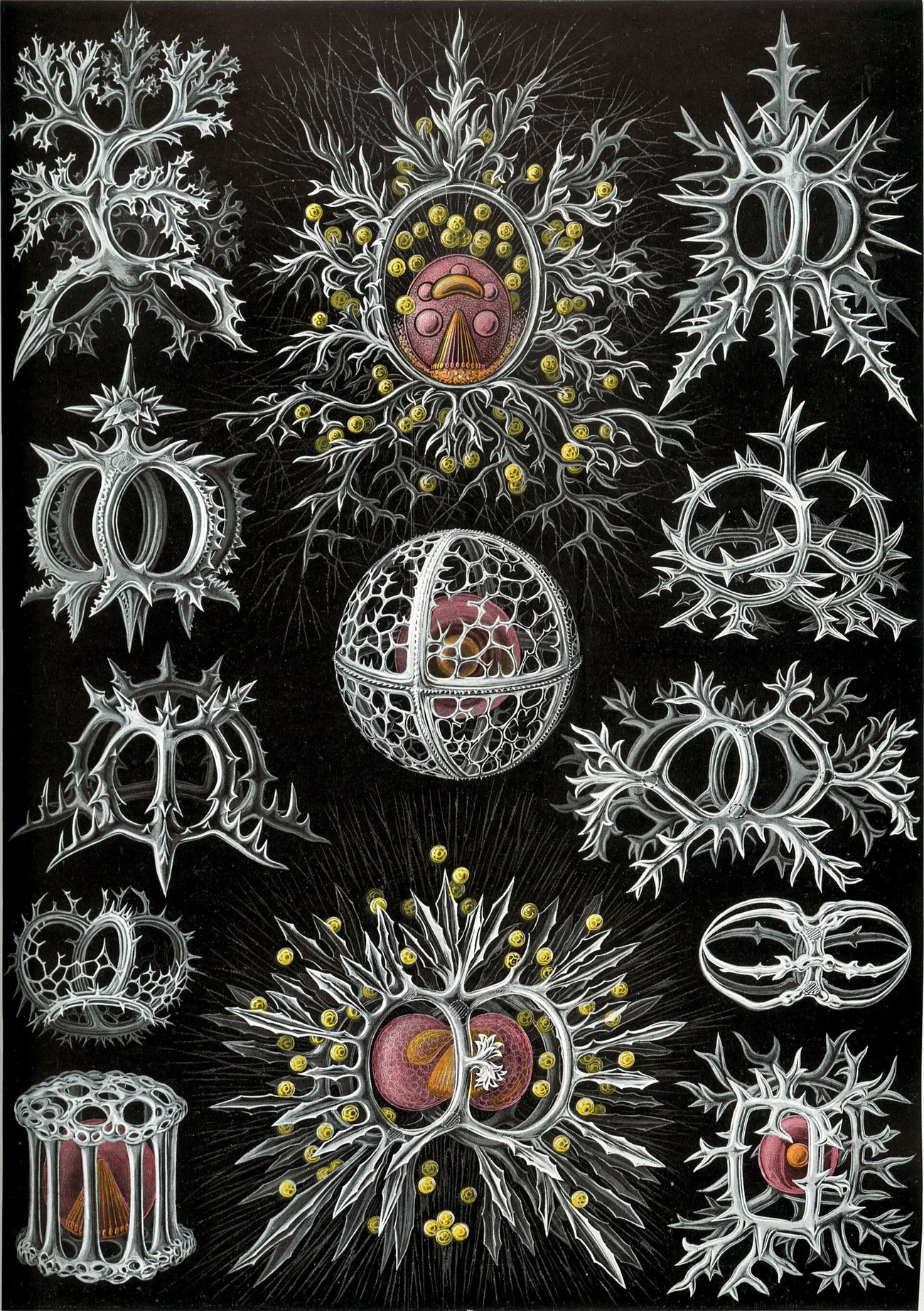
PLATE Nº 08Radiolaria — complex single cells, engraved by Ernst Haeckel
PLATE Nº 08 — Radiolaria: single-celled eukaryotes in full regalia. — Source: Ernst Haeckel, 1904 · public domain
BIOLOGY

The Invention of Sex

Life started mixing genes between parents instead of just copying them. Evolution hit fast-forward.
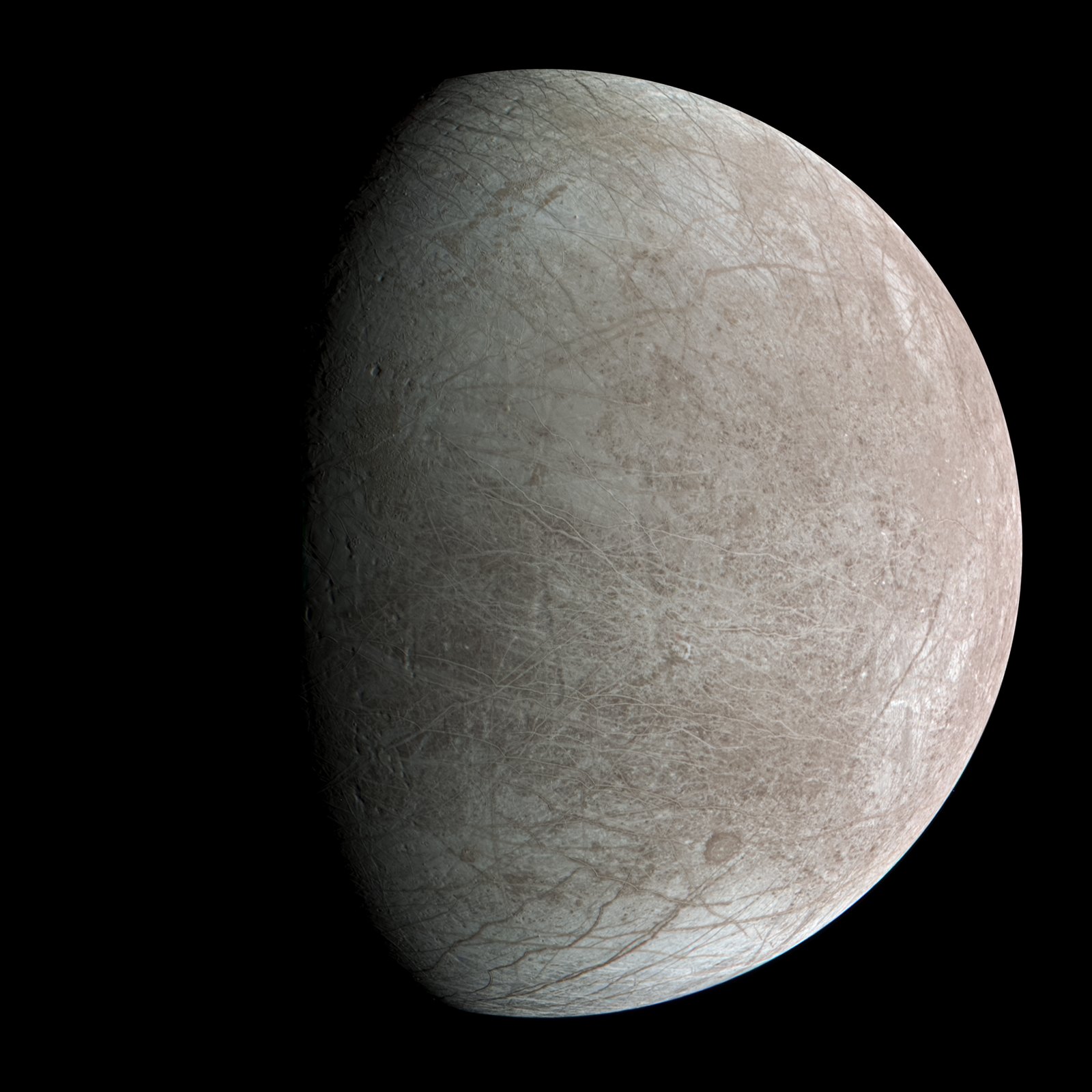
PLATE Nº 09Snowball Earth seen from space — a white marble
PLATE Nº 09 — White Earth. It would have looked like Europa — pictured here. — Source: NASA/JPL-Caltech/Kevin M. Gill · CC BY 3.0
CLIMATE

Snowball Earth, Again — and Worse

Twice more, the planet froze over for tens of millions of years. Volcanoes slowly cooked the ice off — and the thaw may have triggered big life.

BIOLOGY

The First Large Creatures

Life finally got big: soft, quilted, baffling bodies on the seafloor. No eyes, no jaws — rough drafts of animals.
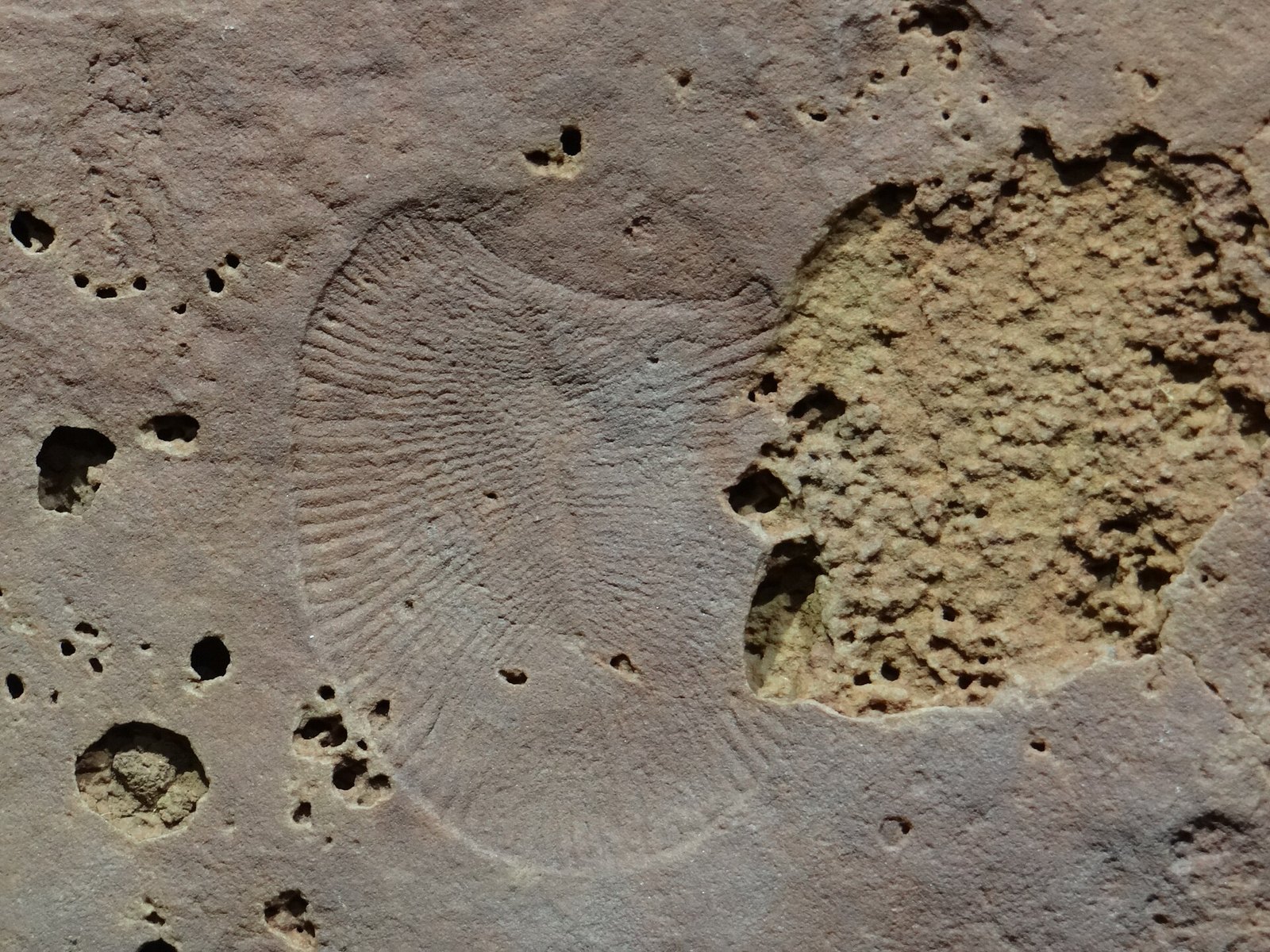
PLATE Nº 10Dickinsonia — the living bath mat, fossilized
PLATE Nº 10 — Dickinsonia, pressed into stone: life's first rough draft. — Source: cprevot / geodiversite.net · CC BY-SA 3.0
CHAPTER IVTHE PALAEOZOIC ERA

Life Explodes

Eyes open for the first time, every body plan is tried at once, life storms the land — and then nearly all of it dies.
541 MILLION YEARS AGO252 MILLION YEARS AGOIN THIS CHAPTER: 289 MILLION YEARS

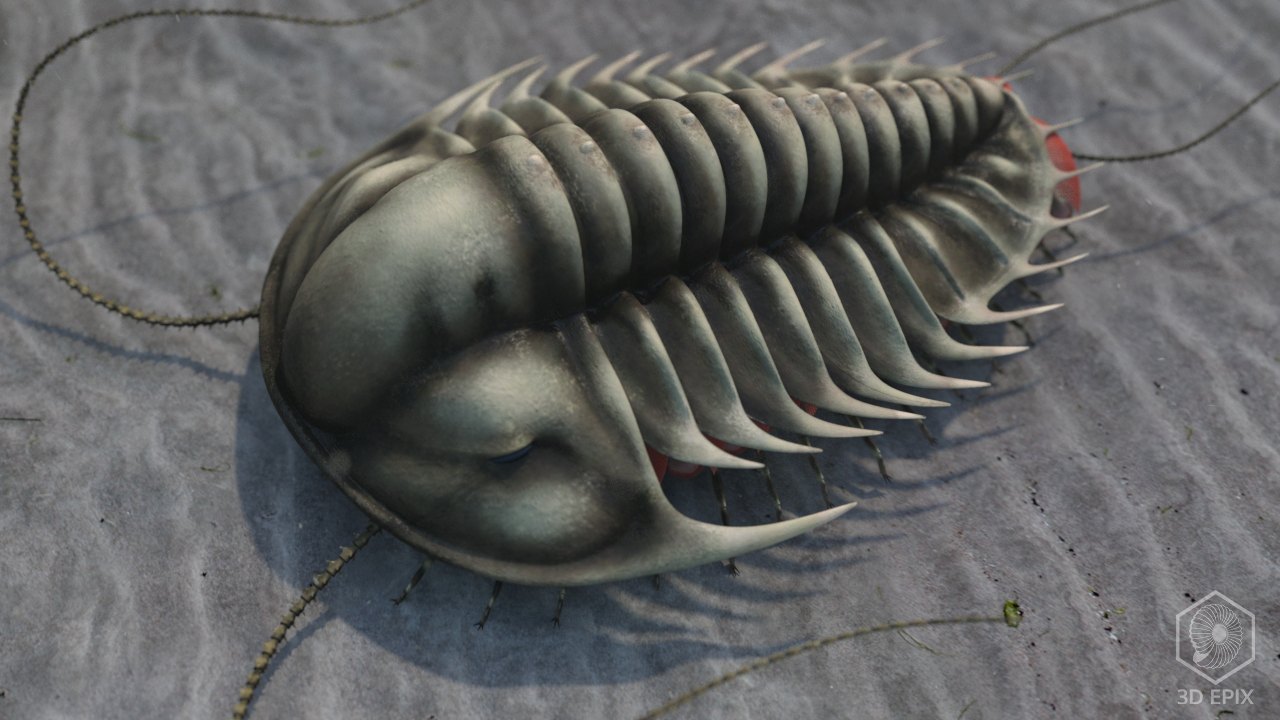
PLATE Nº 11Olenoides serratus — a trilobite of the Burgess Shale
PLATE Nº 11 — Olenoides serratus. Trilobites out-lasted the dinosaurs: 270 million years. — Source: Oleg Kuznetsov · CC BY-SA 4.0
BIOLOGY

The Cambrian Explosion

In a geological blink, the oceans invented everything: shells, legs, claws — and eyes. Once something could see, the arms race began.

BIOLOGY

A Worm Becomes Your Ancestor

A two-centimeter swimmer called Pikaia carried the first proto-backbone. Your entire family tree hangs on it.

BOTANY

The Greening of the Land

Plants crept ashore and began cracking bare rock into soil. The gray planet started to green.

EXTINCTION

The First Great Dying

Wild climate swings erased about 85% of species. The first of five great resets — and not the last.

BIOLOGY

The Fish With Wrists

Tiktaalik had gills, scales — and fins with wrists. Its descendants walked onto land and never looked back. You type with modified fish.
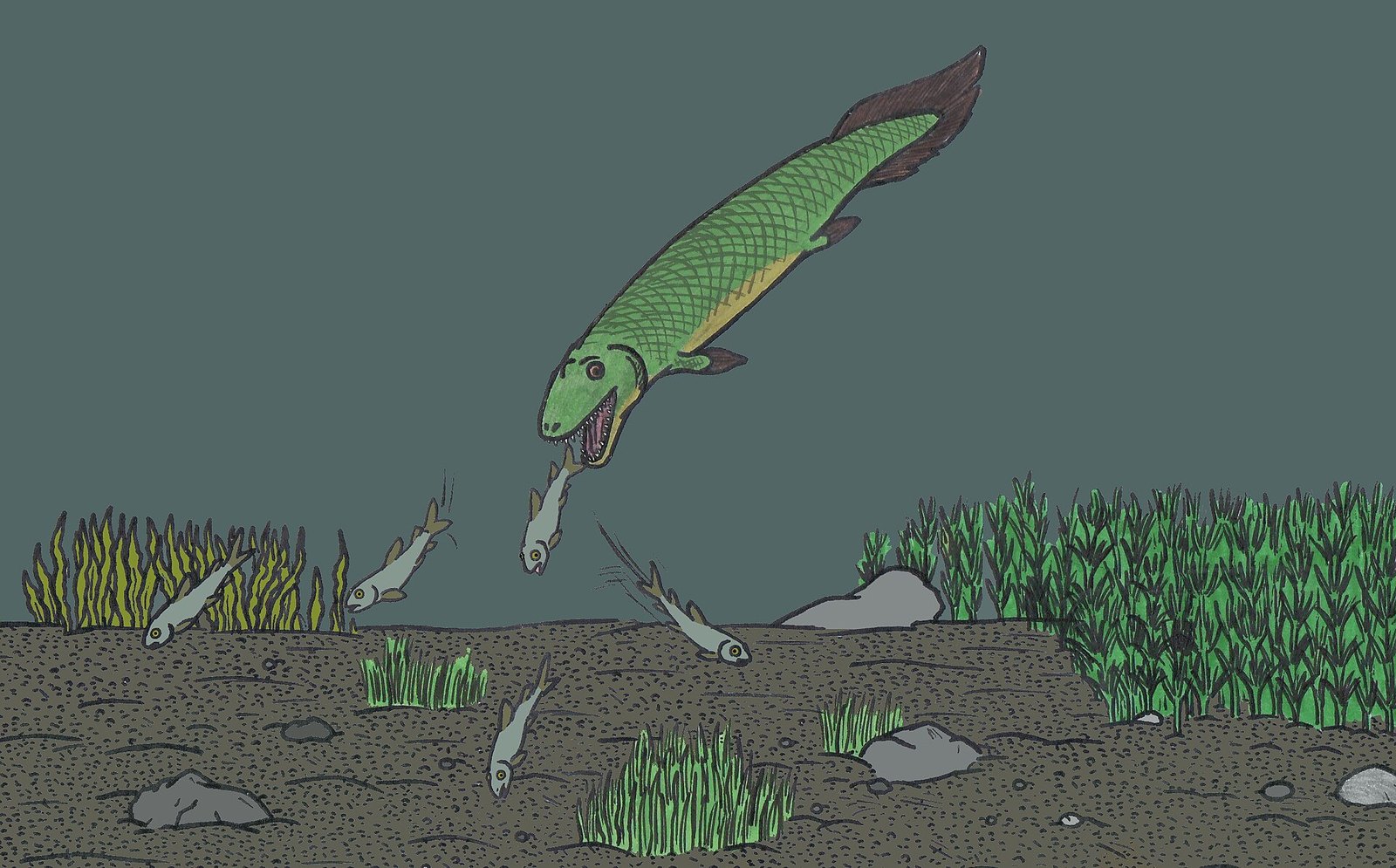
PLATE Nº 12Tiktaalik hauling out onto a muddy bank
PLATE Nº 12 — Tiktaalik roseae: caught in the act of becoming land life. — Source: Conty · public domain
EXTINCTION

The Devonian Collapse

The second extinction ground on for 20 million years. Reefs died, giant armored fish vanished — and the four-legged pioneers carried on.
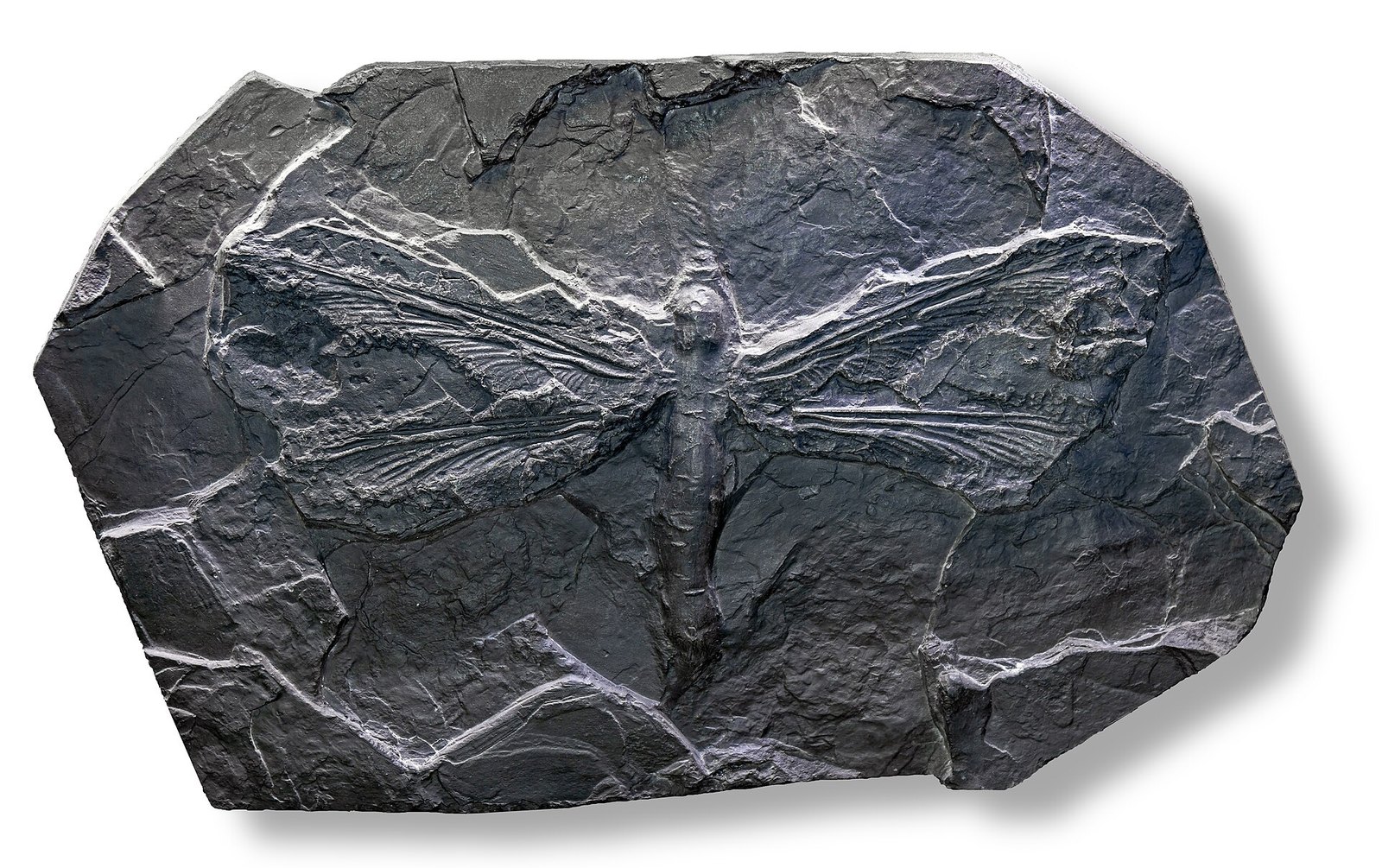
PLATE Nº 13Meganeura monyi — the giant dragonfly, in fossil
PLATE Nº 13 — Meganeura's fossil: 70 cm of wingspan, pressed in French stone. — Source: Didier Descouens, Muséum de Toulouse · CC BY-SA 4.0
BIOLOGY

Dragonflies the Size of Eagles

Oxygen peaked at 35% of the air, and insects grew huge: eagle-sized dragonflies, two-meter millipedes.

BIOLOGY

The Egg That Conquered Land

Reptiles invented the waterproof egg — a private pond in a shell. From here: dinosaurs, birds, and, eventually, us.

GEOLOGY

One World: Pangaea

All land fused into one supercontinent, pole to pole. Its middle was a desert thousands of kilometers from any sea.
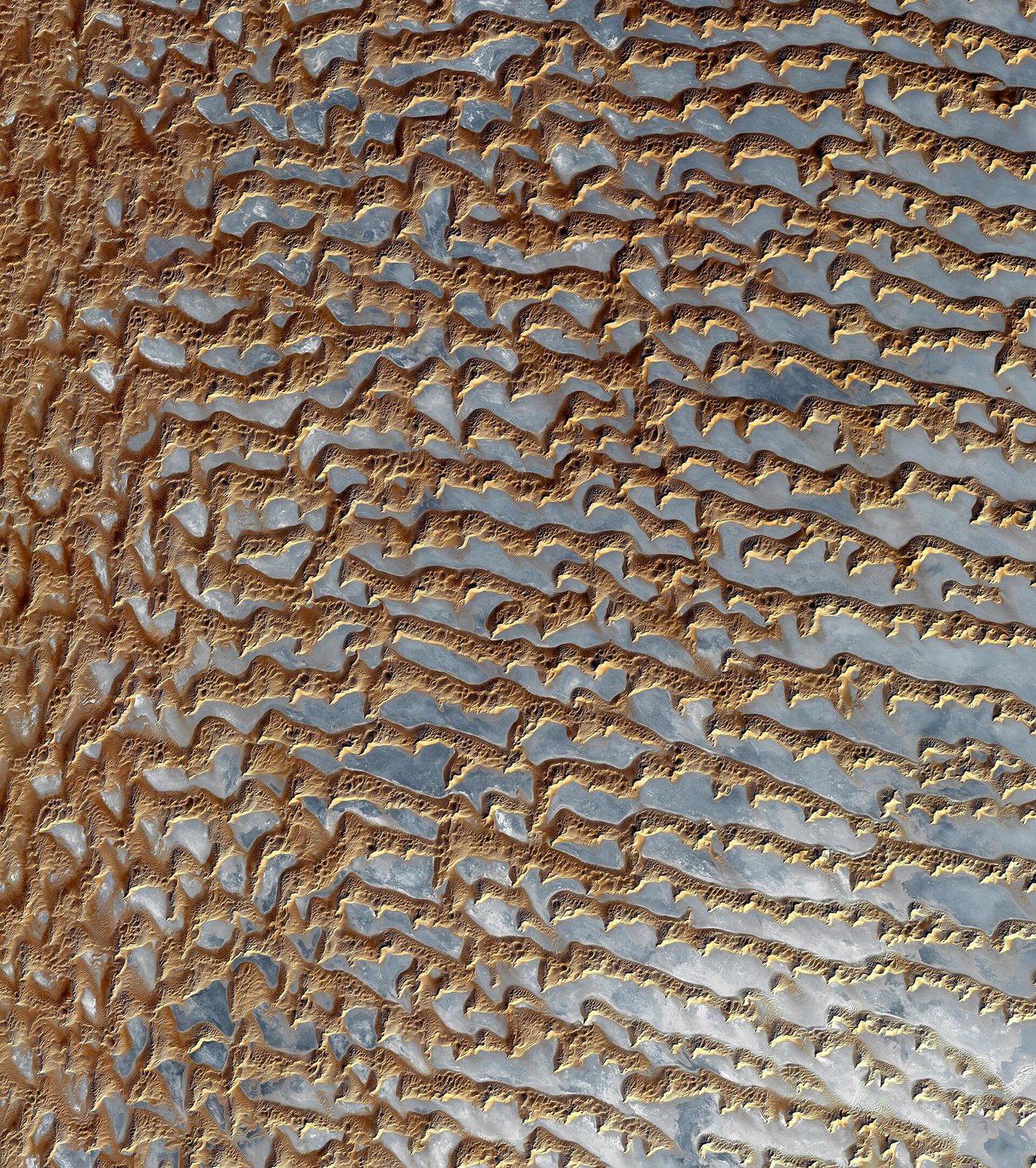
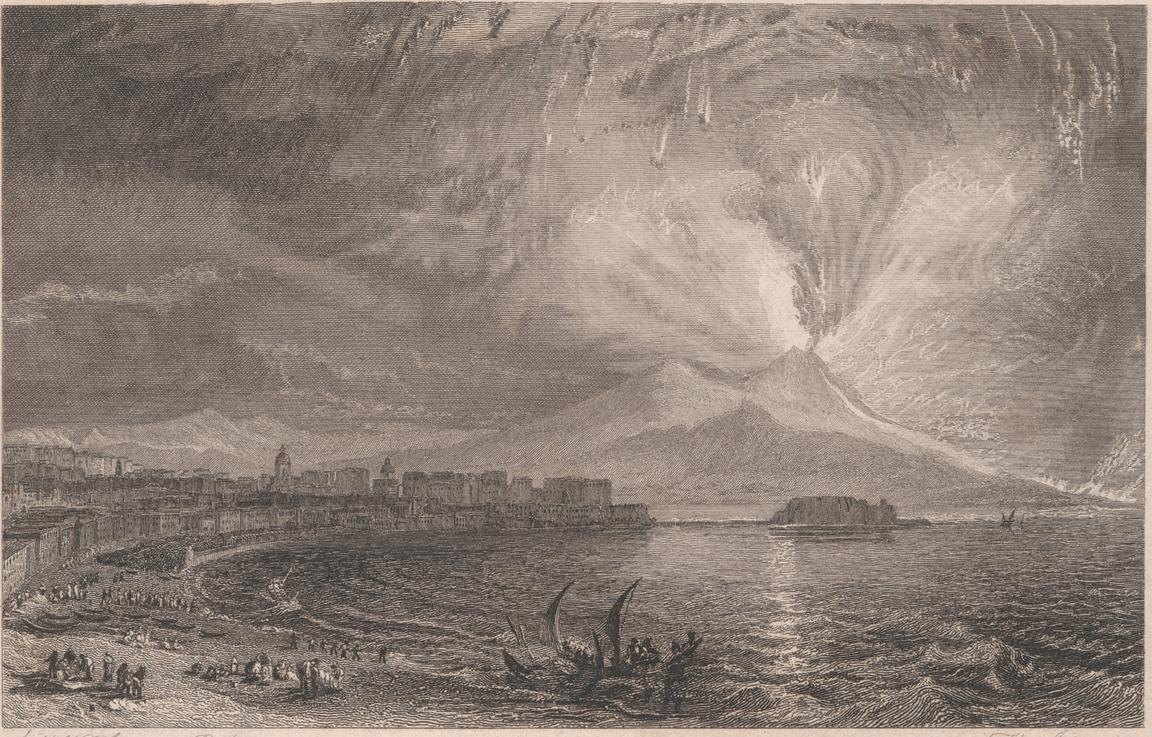
PLATE Nº 14A sand sea seen from orbit — desert on a continental scale
PLATE Nº 14 — The Empty Quarter from space. Pangaea's interior was desert at this scale. — Source: NASA / ASTER Science Team · public domain
PLATE Nº 15An eruption to end an era — Vesuvius, after J.M.W. Turner
PLATE Nº 15 — The Great Dying. The closest life has ever come to checkout time. — Source: T. Jeavons after J.M.W. Turner, Yale Center for British Art · CC0
EXTINCTION

The Great Dying

Siberia split open and poured out lava for ages. 96% of ocean species died. Life almost ended — almost. What crawled out inherited the Earth.

CHAPTER VTHE MESOZOIC ERA

Age of Dinosaurs

Dog-sized creatures become the greatest land animals ever, birds learn the sky, flowers invent color — and a rock from space ends it all in an afternoon.
252 MILLION YEARS AGO66 MILLION YEARS AGOIN THIS CHAPTER: 186 MILLION YEARS

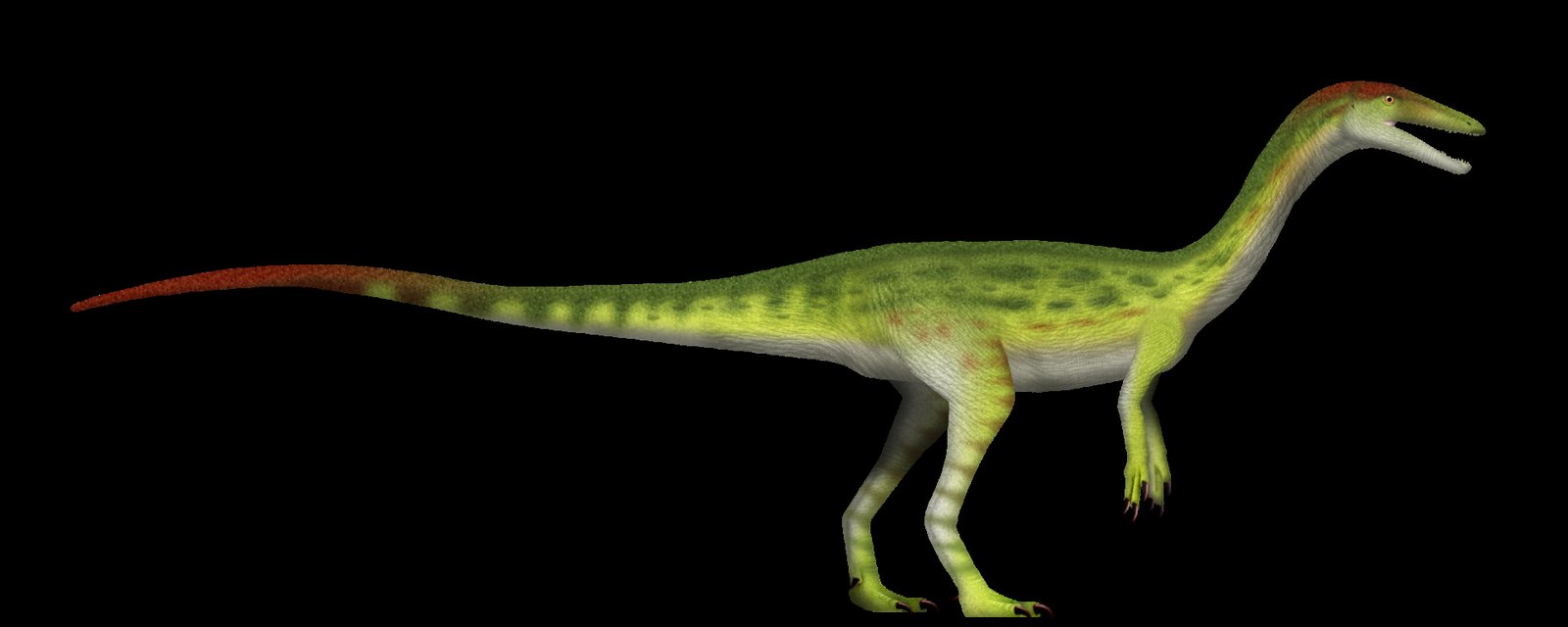
PLATE Nº 16A Coelophysis pack at dawn — the first dinosaurs
PLATE Nº 16 — Coelophysis. Every tyrant starts somewhere small. — Source: TotalDino · CC BY-SA 4.0
PALEONTOLOGY

The First Dinosaurs (Very Modest)

The first dinosaurs were dog-sized and quick — nobodies in a world ruled by giant crocodiles. They waited in the wings.

PALEONTOLOGY

Meanwhile, in the Undergrowth…

The first mammals were shrew-sized night creatures. For 160 million years they stayed small and hid. Remember them.
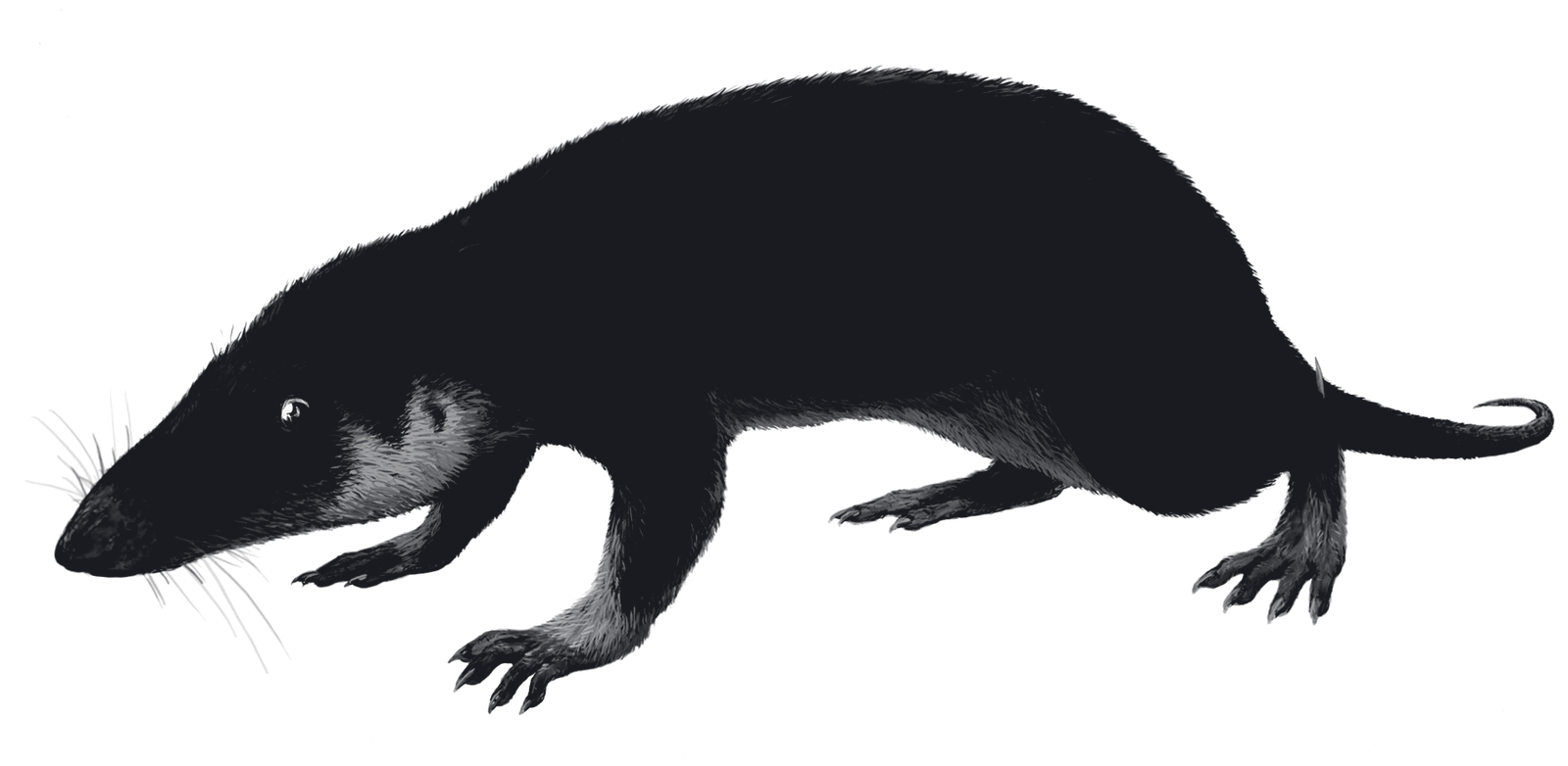
PLATE Nº 17
Morganucodon, shrew-like early mammal, beneath dinosaur feet
PLATE Nº 17 — Morganucodon: your very-great-(many-greats)-grandparent. — Source: FunkMonk · CC BY-SA 3.0
EXTINCTION

The Stage Clears

Pangaea ripped apart and volcanoes poisoned the air. The dinosaurs' rivals died — and the Earth was theirs.
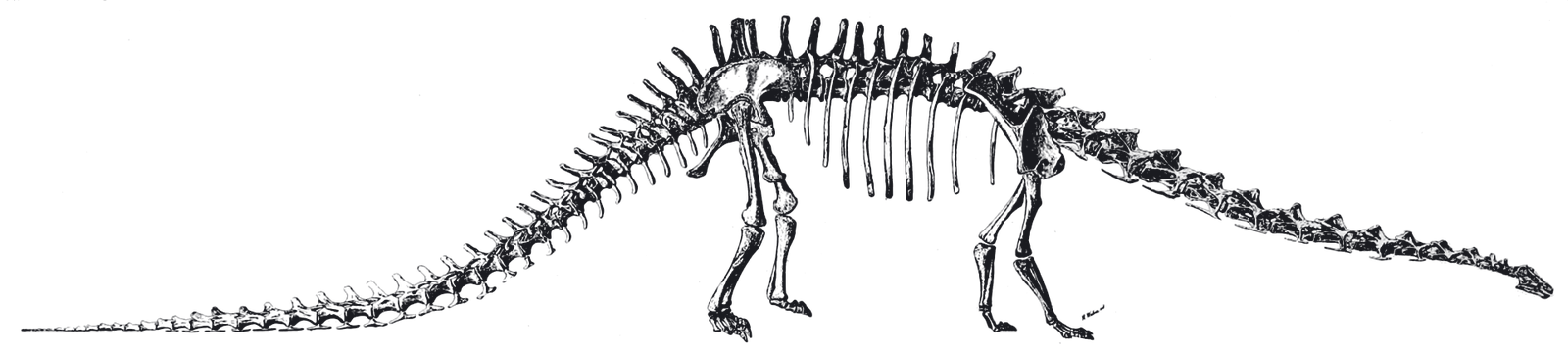
PLATE Nº 18
Diplodocus carnegii — the first mounted sauropod, restored 1905
PLATE Nº 18 — Diplodocus carnegii, restored in 1905: the high summer of the reptiles, in bone. — Source: Popular Science Monthly, 1905 · public domain
PALEONTOLOGY

The Jurassic Giants

The golden age: long-necked Brachiosaurus browsed the treetops, Stegosaurus grazed, Allosaurus hunted. For tens of millions of years, giants were just the local wildlife.
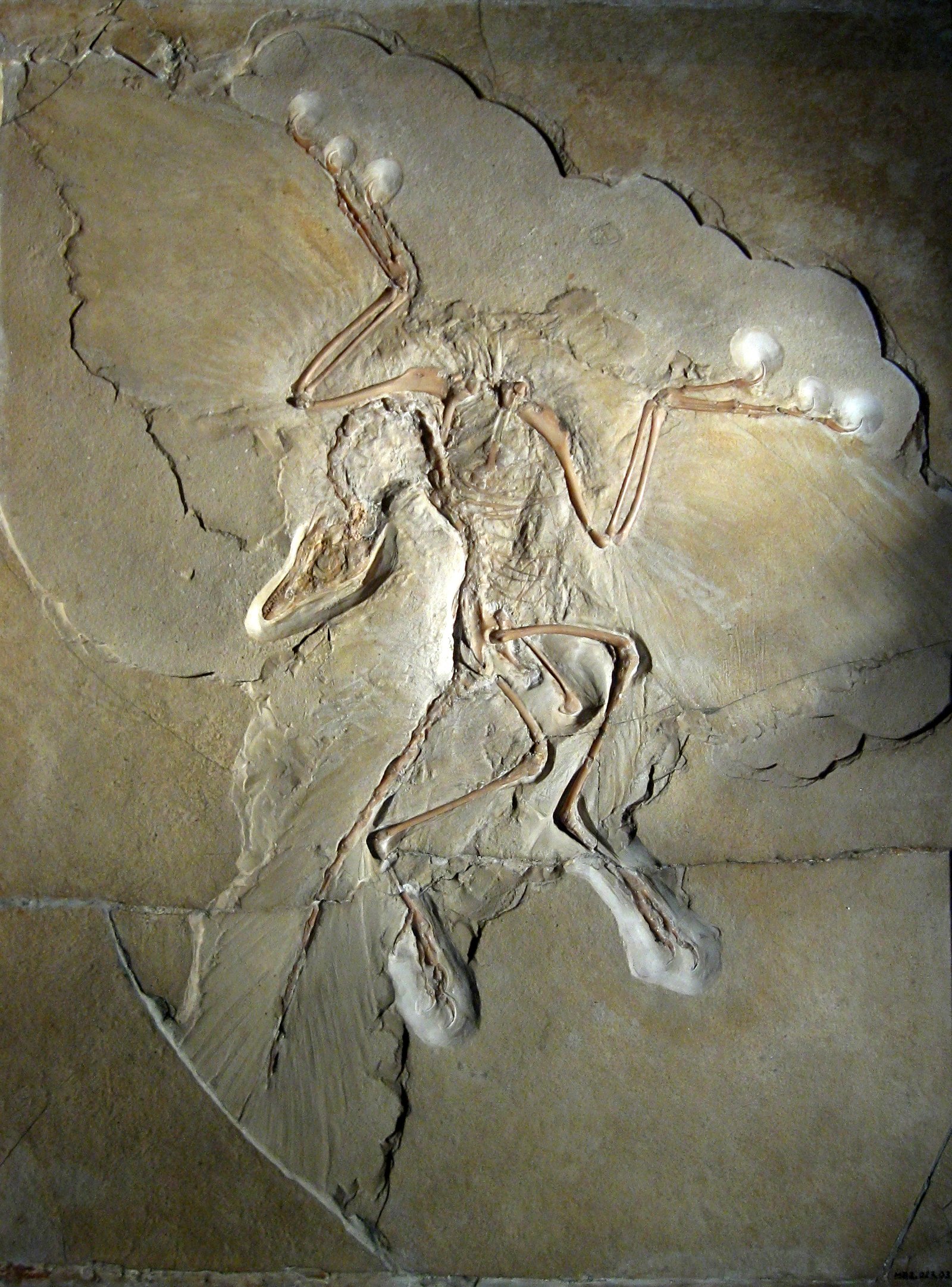
PLATE Nº 19The Berlin specimen — the most famous fossil in the world
PLATE Nº 19 — Archaeopteryx, the Berlin specimen: a dinosaur mid-transformation. — Source: H. Raab · CC BY-SA 3.0
PALEONTOLOGY

A Dinosaur Tries the Sky

Archaeopteryx — half dinosaur, half bird — made clumsy glides between islands. It worked. Today's pigeons are its family.

PLATE Nº 21
Spinosaurus fishing in a Cretaceous river
PLATE Nº 21 — Spinosaurus aegyptiacus: the river monster, in bone. — Source: Marco Auditore / Ibrahim et al. · CC BY 4.0
PALEONTOLOGY

The Cretaceous Peak

Spinosaurus fished the rivers; Argentinosaurus — maybe 80 tonnes — shook the ground. The biggest land animal ever is a dinosaur, not a mammal.

PALEONTOLOGY

The Tyrant King

At the very end came T. rex: a bite that could crush a car. Facing it: Triceratops, with horns like lances. It was all about to end — from the sky.
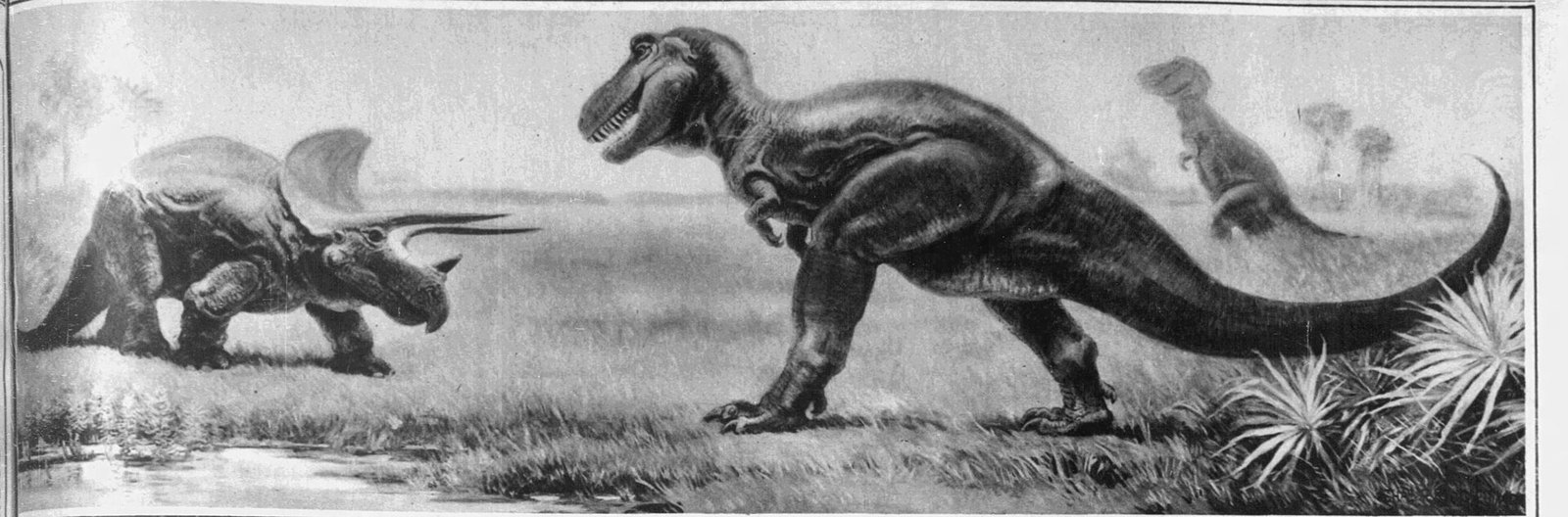
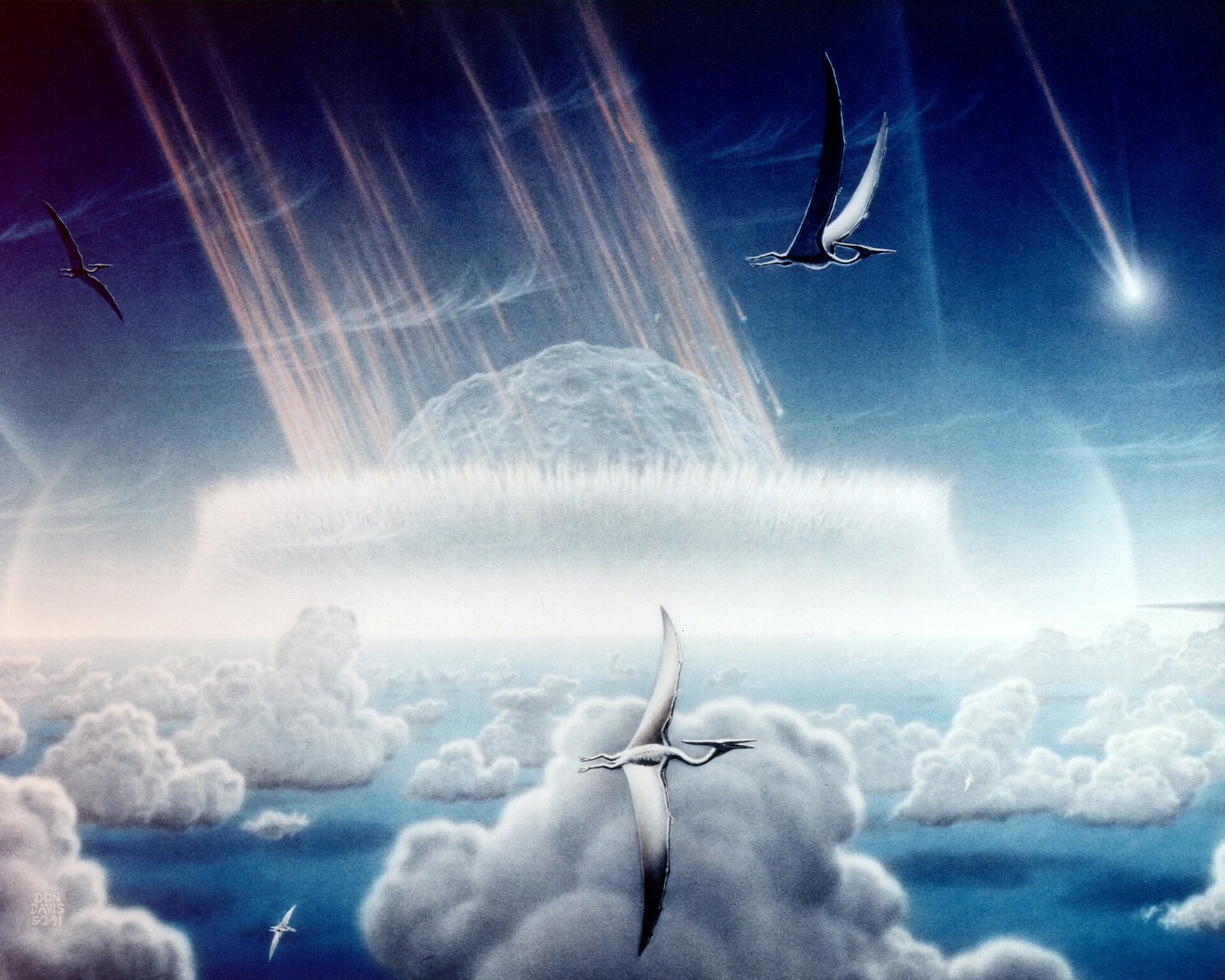
PLATE Nº 22Tyrannosaurus rex facing Triceratops — by Charles R. Knight
PLATE Nº 22 — Rex and Trike: the most famous staredown of the last 66 million years. — Source: Charles R. Knight · public domain
PLATE Nº 23The Chicxulub impact — the asteroid striking, sky on fire
PLATE Nº 23 — Chicxulub. The worst afternoon in the history of complex life. — Source: Donald E. Davis / NASA · public domain
EXTINCTION

The Day the Sky Fell

A 10-kilometer rock hit Mexico at 60,000 km/h. The sky went dark for years. Every dinosaur without feathers ended. The small furry ones in burrows made it.

CHAPTER VITHE CENOZOIC ERA

The Mammal Renaissance

Furtive furballs inherit the Earth, whales walk, apes stand up, fire is tamed — and a clever primate starts keeping track of everything.
66 MILLION YEARS AGO12 THOUSAND YEARS AGOIN THIS CHAPTER: 66 MILLION YEARS

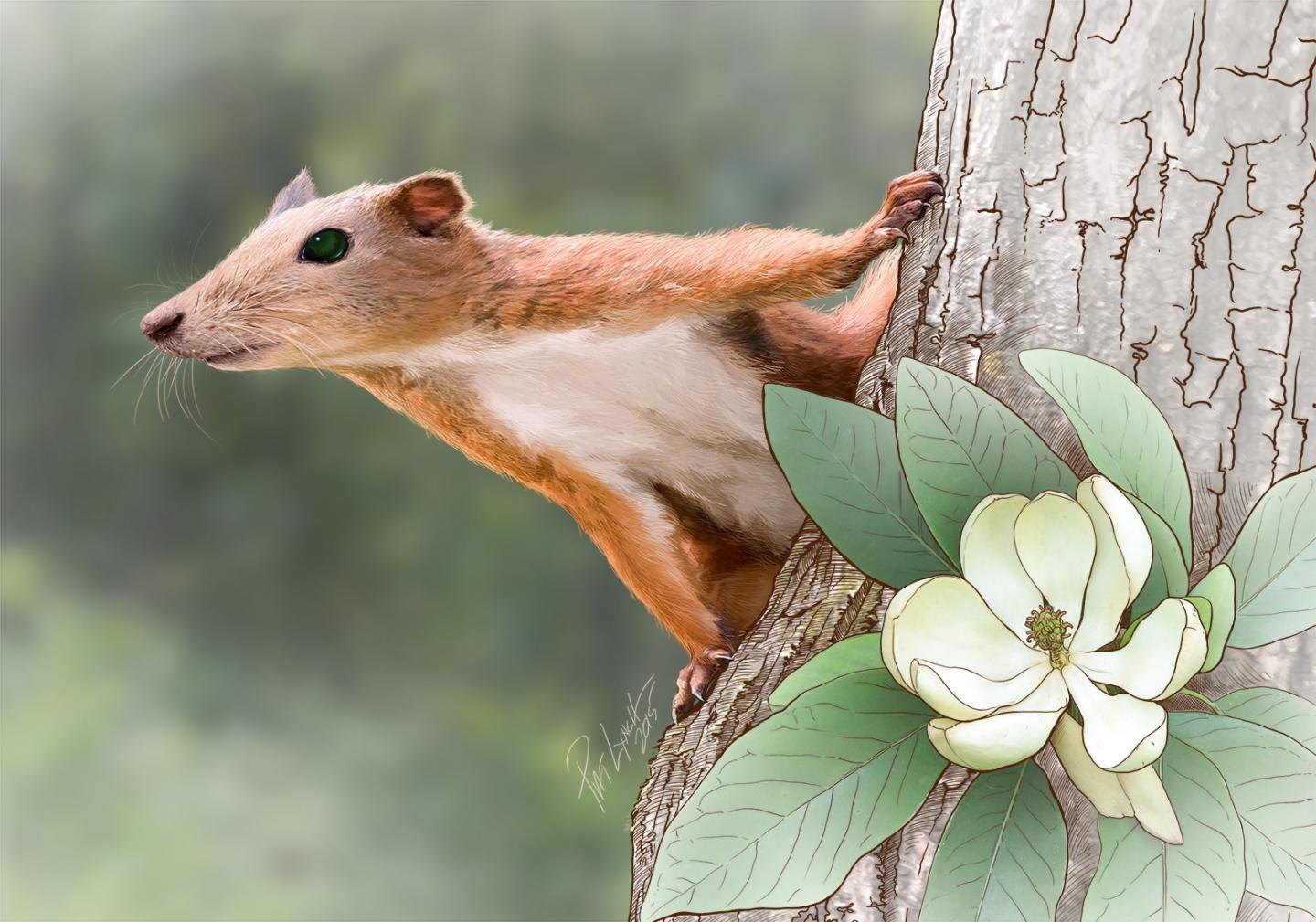
PLATE Nº 24Purgatorius in a fern prairie after the impact winter
PLATE Nº 24 — Purgatorius: tiny, furry, and holding the deed to the future. — Source: Patrick Lynch / Yale University · CC BY
PALEONTOLOGY

Out of the Burrows

The survivors were small, furry, and hungry. Within 200,000 years they had doubled in size — and kept going.

PALEONTOLOGY

The First Primates

In hot jungles came the first primates: grasping hands, forward-facing eyes, restless curiosity. Our order enters the story.

PALEONTOLOGY

The Whale That Walked

Whales began on land. Ambulocetus could still waddle ashore — its descendants became the largest animals that have ever lived.
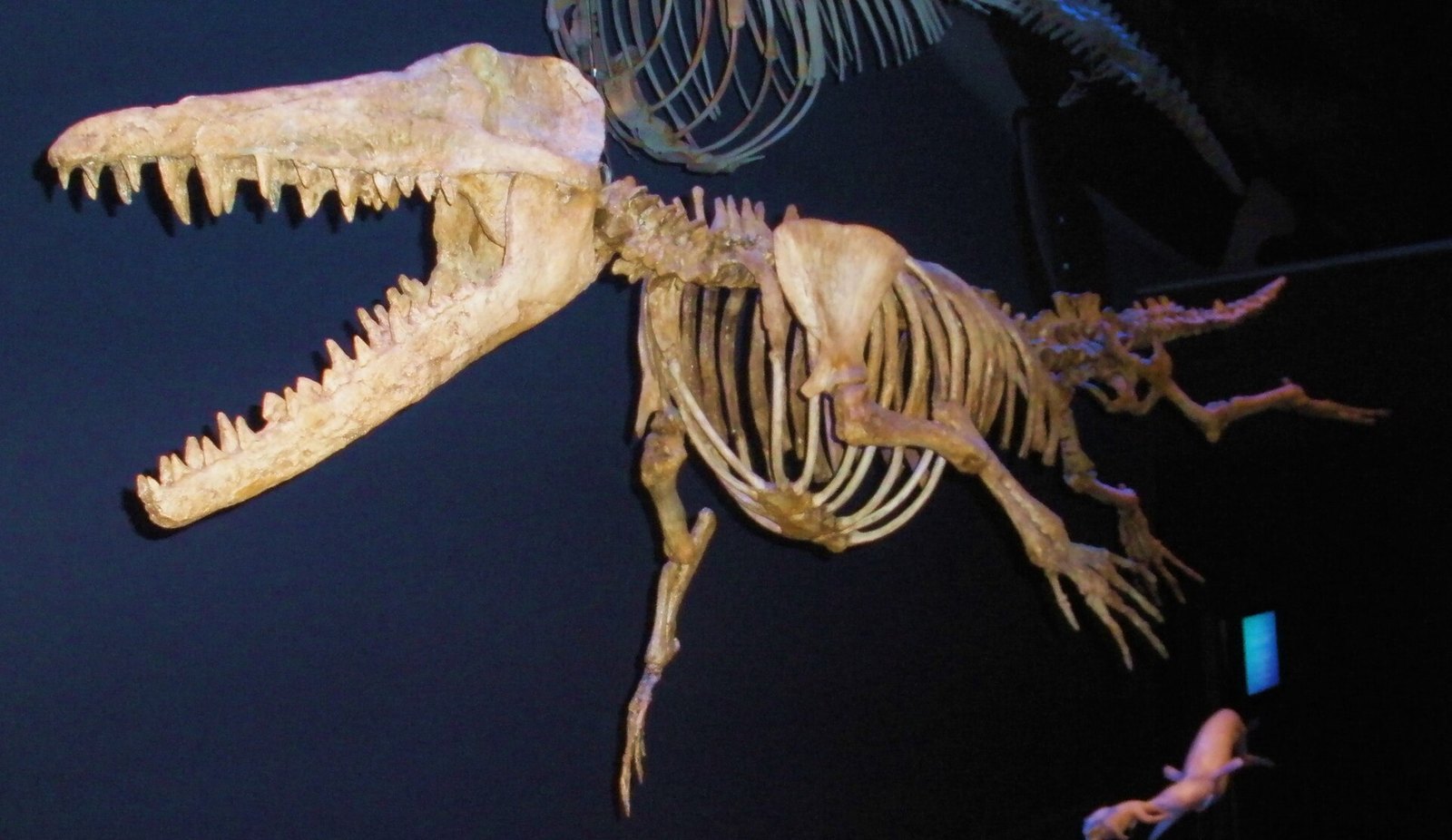
PLATE Nº 25Ambulocetus natans — mounted mid-swim
PLATE Nº 25 — Ambulocetus: the walking whale, mounted mid-swim. — Source: Ghedoghedo · CC BY-SA 3.0
CLIMATE

The World Gets Its Ice

Antarctica froze for good. Grass spread over the drying continents — and hooves, herds and horizons followed.

HUMANITY

The Family Splits

One line of apes tried walking on two legs. That experiment became us — though for most of the time, several human species lived at once.

PLATE Nº 26
Lucy — the reconstructed skeleton
PLATE Nº 26 — Lucy, reconstructed. Still the most famous walker in history. — Source: W. V. ('120') · CC BY 2.5
HUMANITY

Lucy Walks

Lucy walked fully upright 3.2 million years ago, with a chimp-sized brain. First we stood up — then we got smart.

HUMANITY

Stone Becomes Tool

Someone struck one stone against another and made a blade. Technology had begun.

HUMANITY

Fire Is Tamed

Cooked food, safer nights, and a hearth to sit around and tell things. A million-year-old habit you still feel at any campfire.

HUMANITY

Homo Sapiens Arrives

Faces you'd recognize on a bus — in Morocco, 300,000 years ago. We shared the planet with at least four other human species.
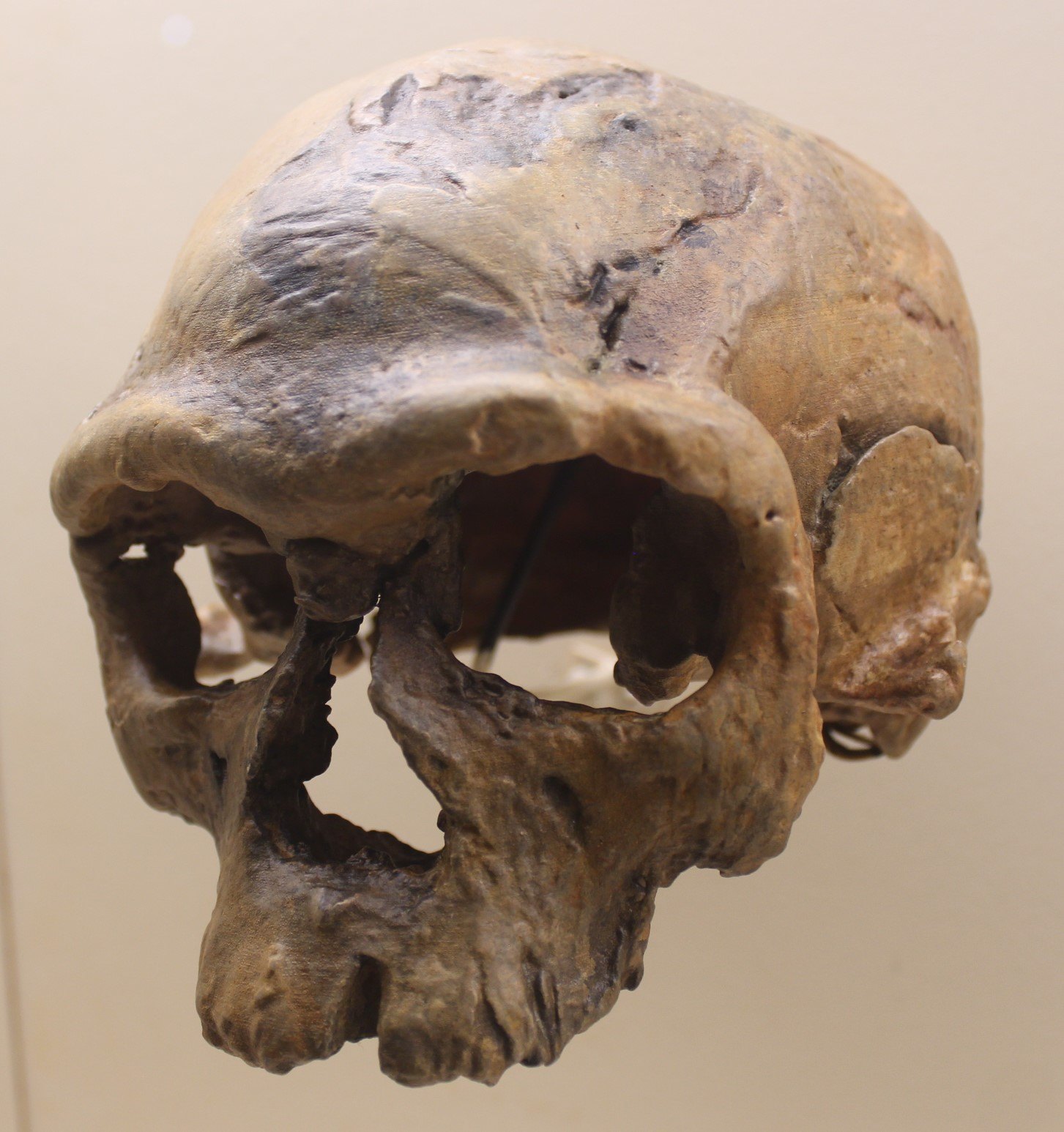
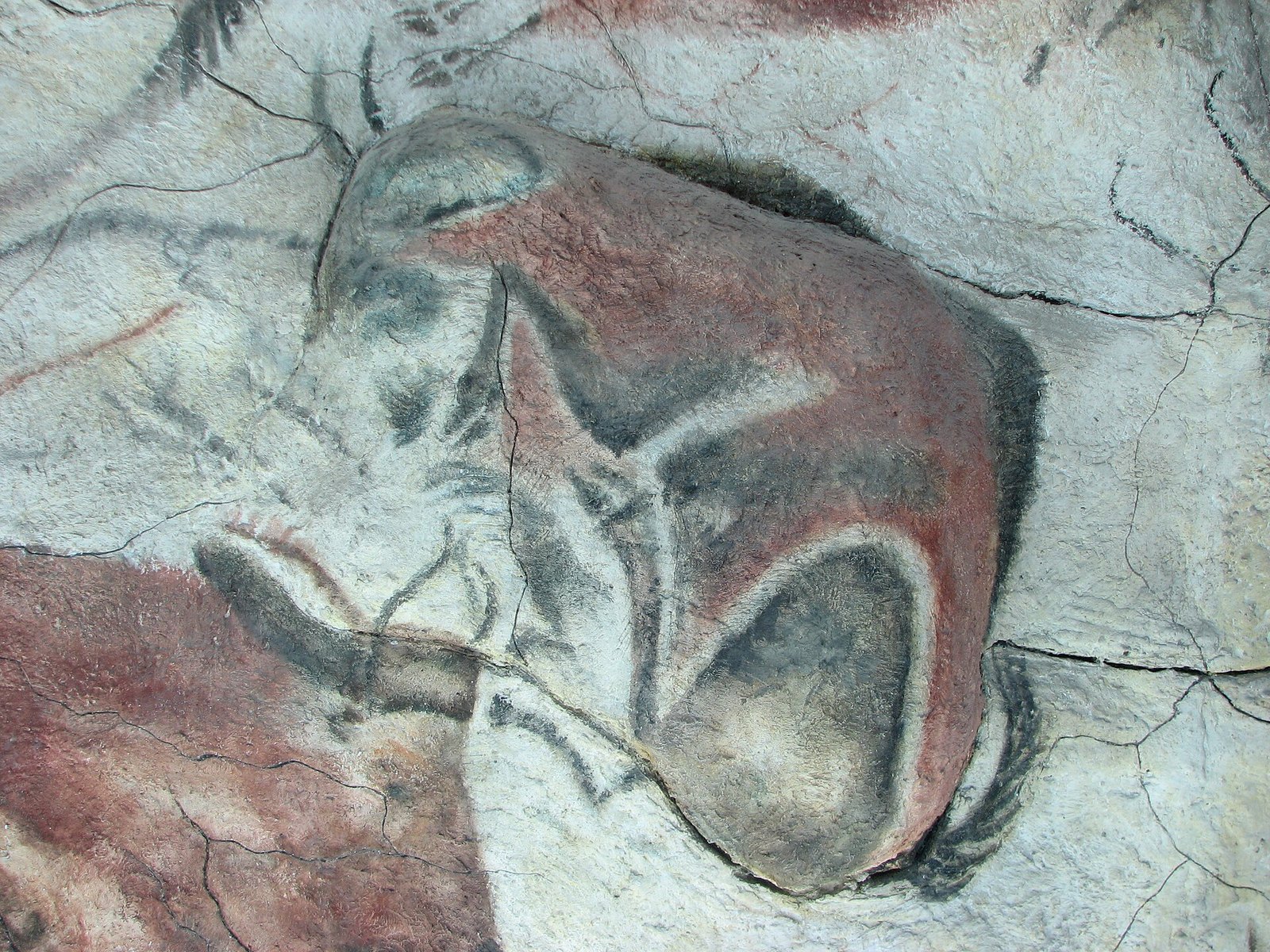
PLATE Nº 27The Jebel Irhoud skull — the oldest of us
PLATE Nº 27 — Jebel Irhoud 1: the oldest known face of our species. — Source: Jonathan Chen, NMNH · CC BY-SA 4.0
PLATE Nº 28The bison of Altamira — among the first published pictures
PLATE Nº 28 — The bison of Altamira. Art is older than farming, cities, and writing combined. — Source: HTO · public domain
HUMANITY

The First Magazine

By lamplight, deep in caves, people painted lions, horses, and their own hands. The urge to leave a mark: we were here.

CHAPTER VIITHE HOLOCENE — US

The Civilization Issue

Wheat tames the ape, cities rise, writing is invented, engines roar — and one species steps back to look at the whole page.

12 THOUSAND YEARS AGOYEAR 2,026 CEIN THIS CHAPTER: 12,000 YEARS — THE LAST 0.0003% OF THE STORY

HUMANITY

The First Temple (Before the First Farm)

Before farming or writing, people raised six-ton stone pillars in circles at Göbekli Tepe. Maybe believing came before bread.
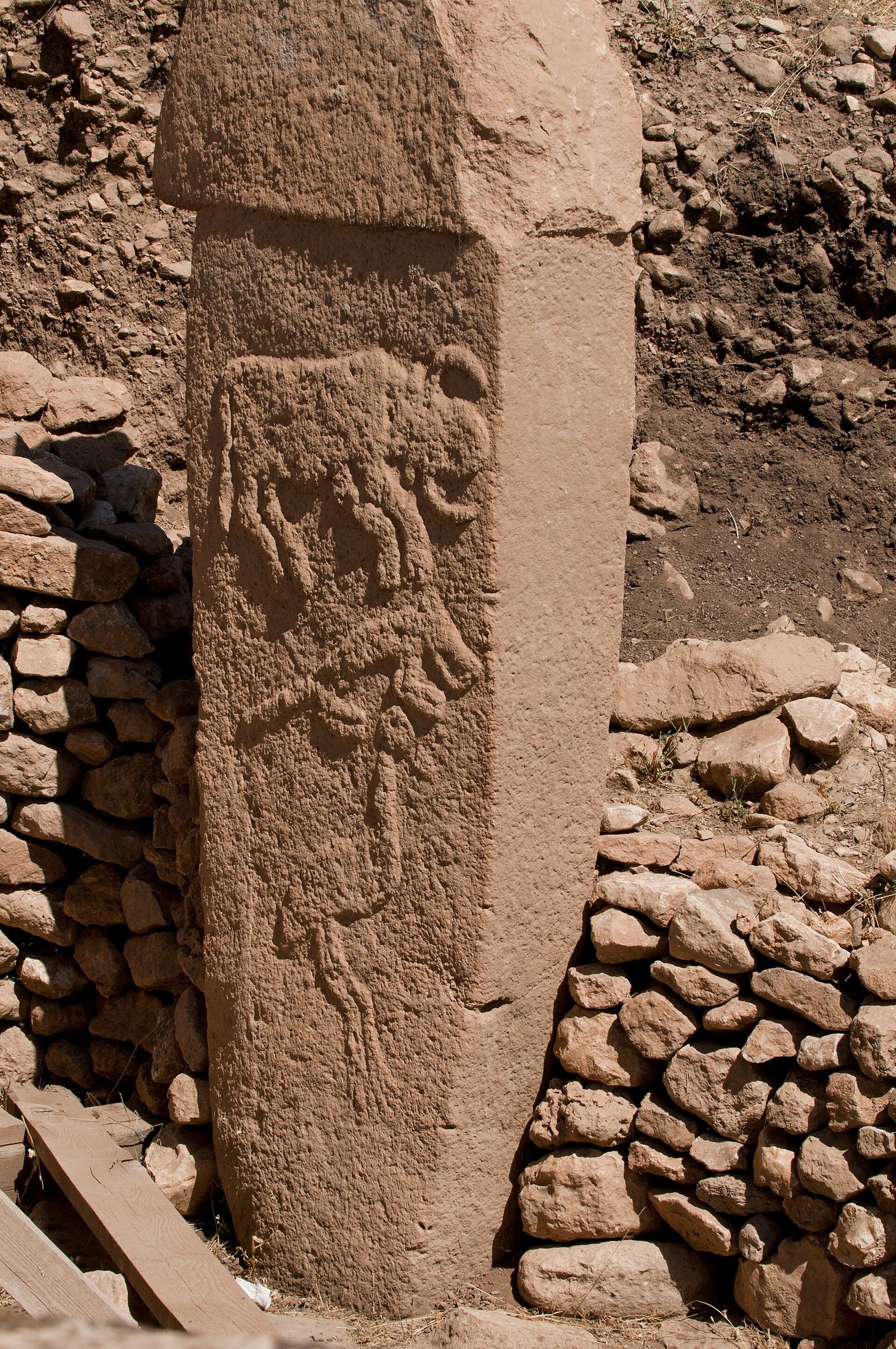
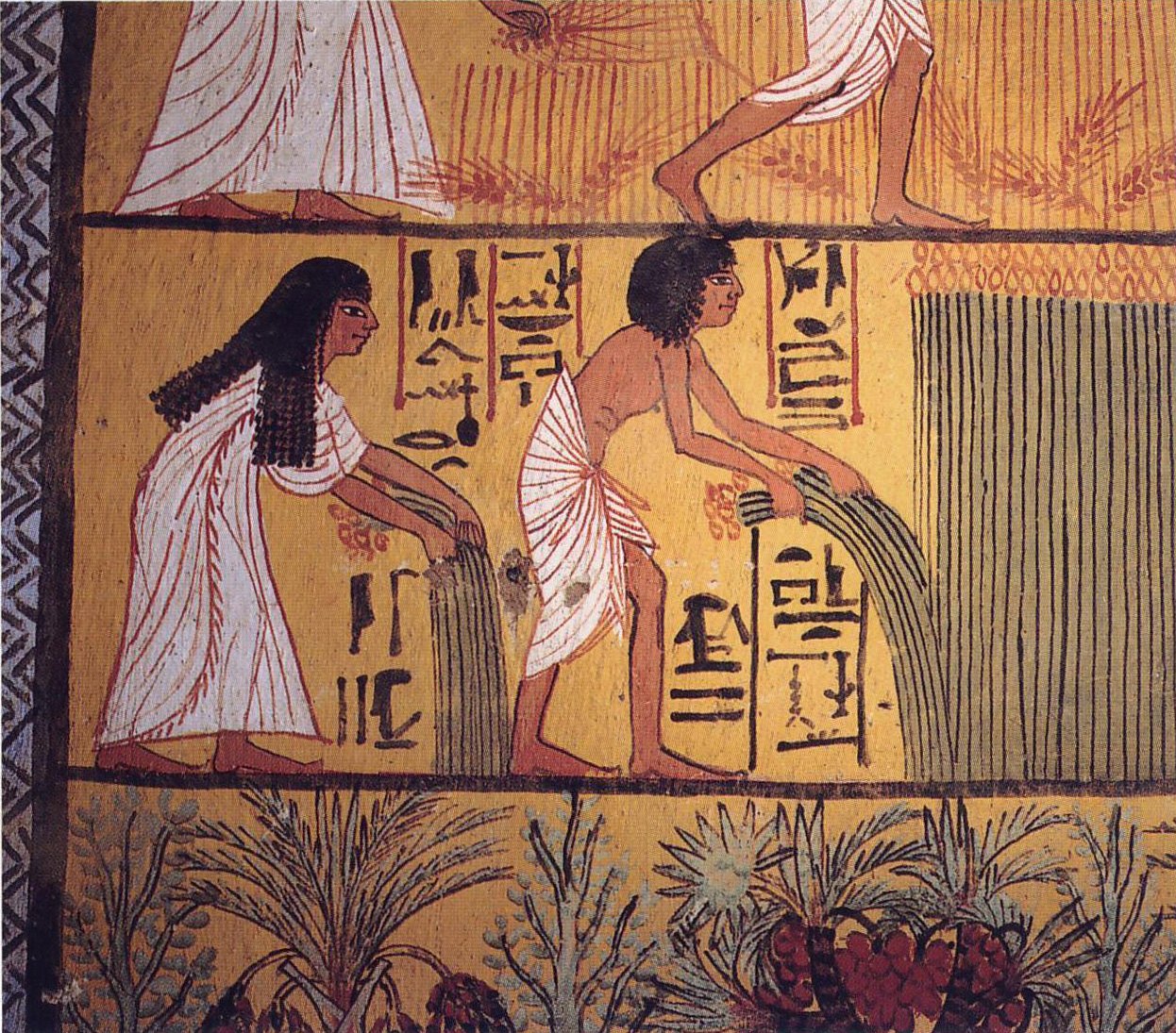
PLATE Nº 29A carved T-pillar of Göbekli Tepe
PLATE Nº 29 — A pillar of Göbekli Tepe. Architecture predates agriculture. — Source: Teomancimit · CC BY-SA 3.0
PLATE Nº 30A harvest scene from an Egyptian tomb
PLATE Nº 30 — The first harvests, remembered on a tomb wall. — Source: Anonymous Egyptian tomb artists · public domain
HUMANITY

Wheat Domesticates the Ape

People planted wild grass on purpose — and wheat quietly tamed the ape. Fields, villages, bread, beer.

HUMANITY

Cities, and the Invention of Writing

Uruk: the first big city. To track grain and beer, accountants pressed marks into clay — and invented writing. This page descends from those receipts.
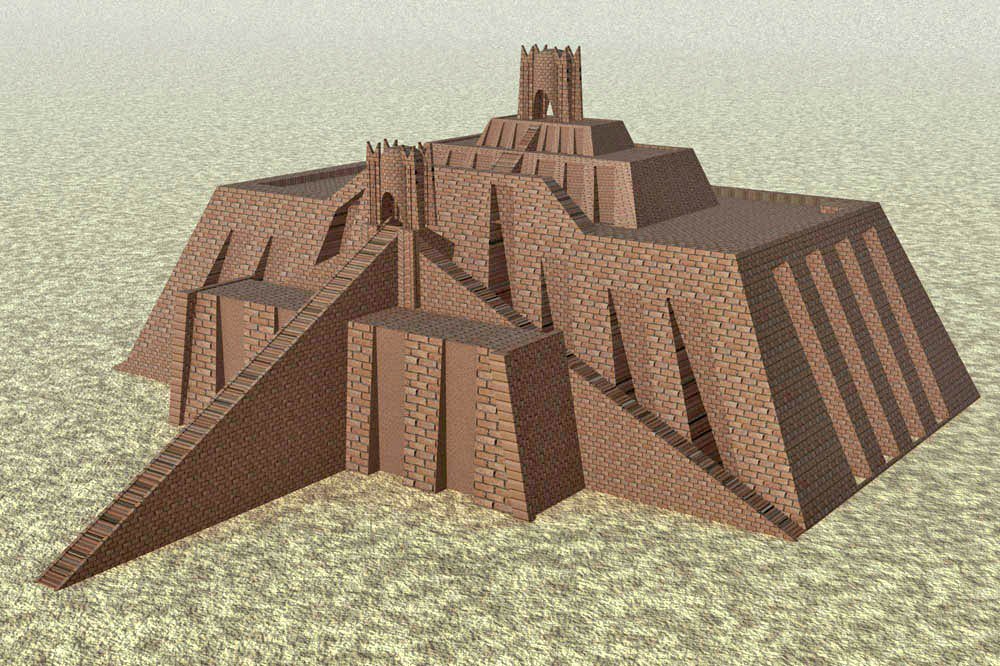
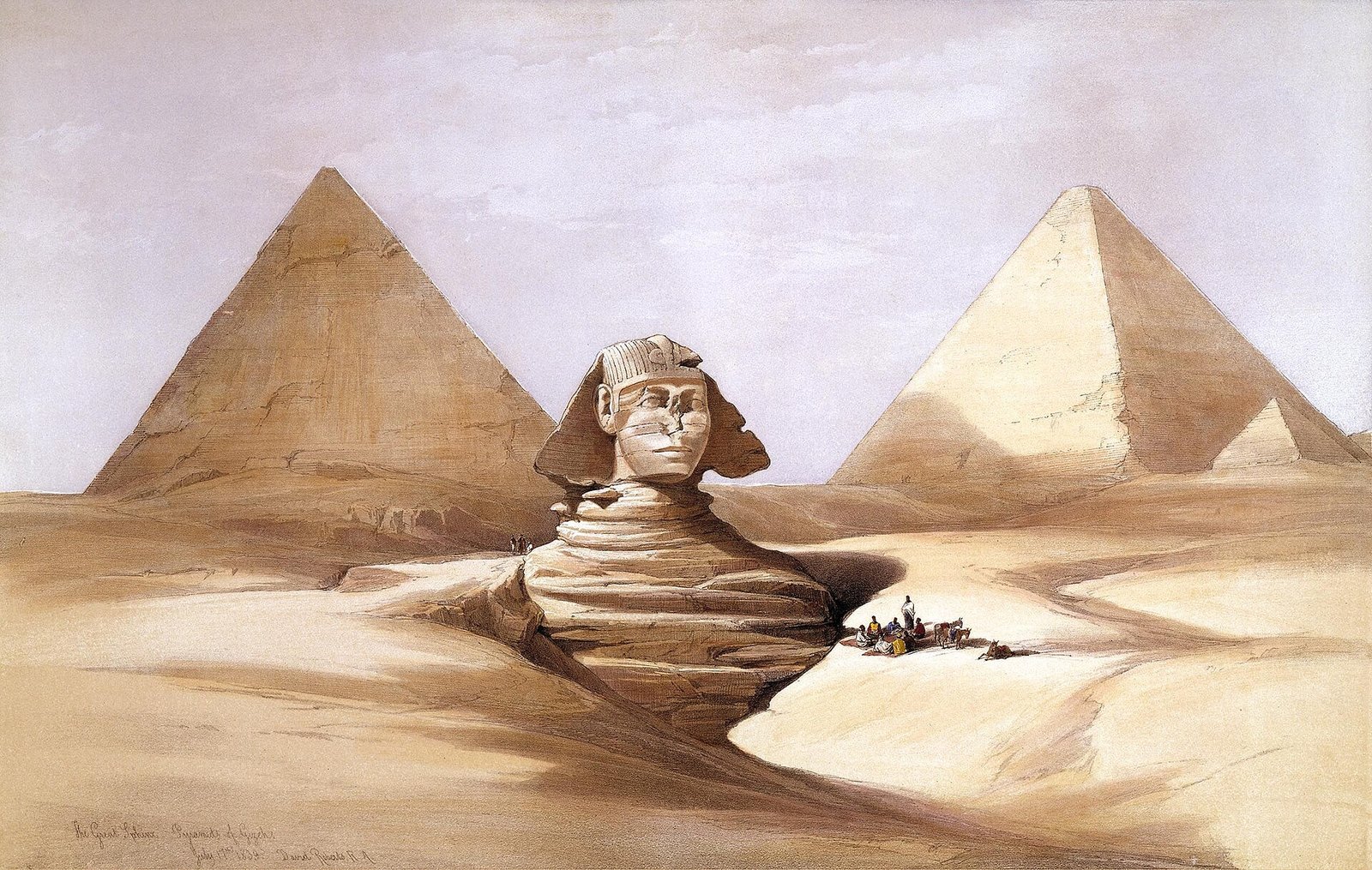
PLATE Nº 31The ziggurat — mountain built by hand
PLATE Nº 31 — The ziggurat. The first cities came with the first skylines. — Source: wikiwikiyarou · public domain
PLATE Nº 32Giza in 1839 — already 4,300 years old
PLATE Nº 32 — Giza, drawn in 1839 — when the pyramids were already 4,300 years old. — Source: David Roberts, 1839 · public domain
HUMANITY

The Great Pyramid

2.3 million blocks; the tallest human structure for 3,800 years. To Cleopatra, it was already older than she is to you.

HUMANITY

Rome: A She-Wolf's Startup

A riverside town became an empire of 70 million. Its roads, laws and concrete still shape your life.

HUMANITY

The Black Death

In five years, plague erased up to half of Europe. The smallest forms of life still edit the human story.

HUMANITY

Two Worlds Collide

After 15,000 years apart, the hemispheres met. Potatoes went east, horses went west — and nothing was the same again.

TECHNOLOGY

The Steam Engine

Humans learned to burn the Carboniferous — coal, 300-million-year-old forests — and the curve of everything bent upward.

TECHNOLOGY

Footprints on the Moon

In 1969, humans walked on the Moon — the same Moon born in Chapter One. Dust became planet, planet became ape, ape came home.
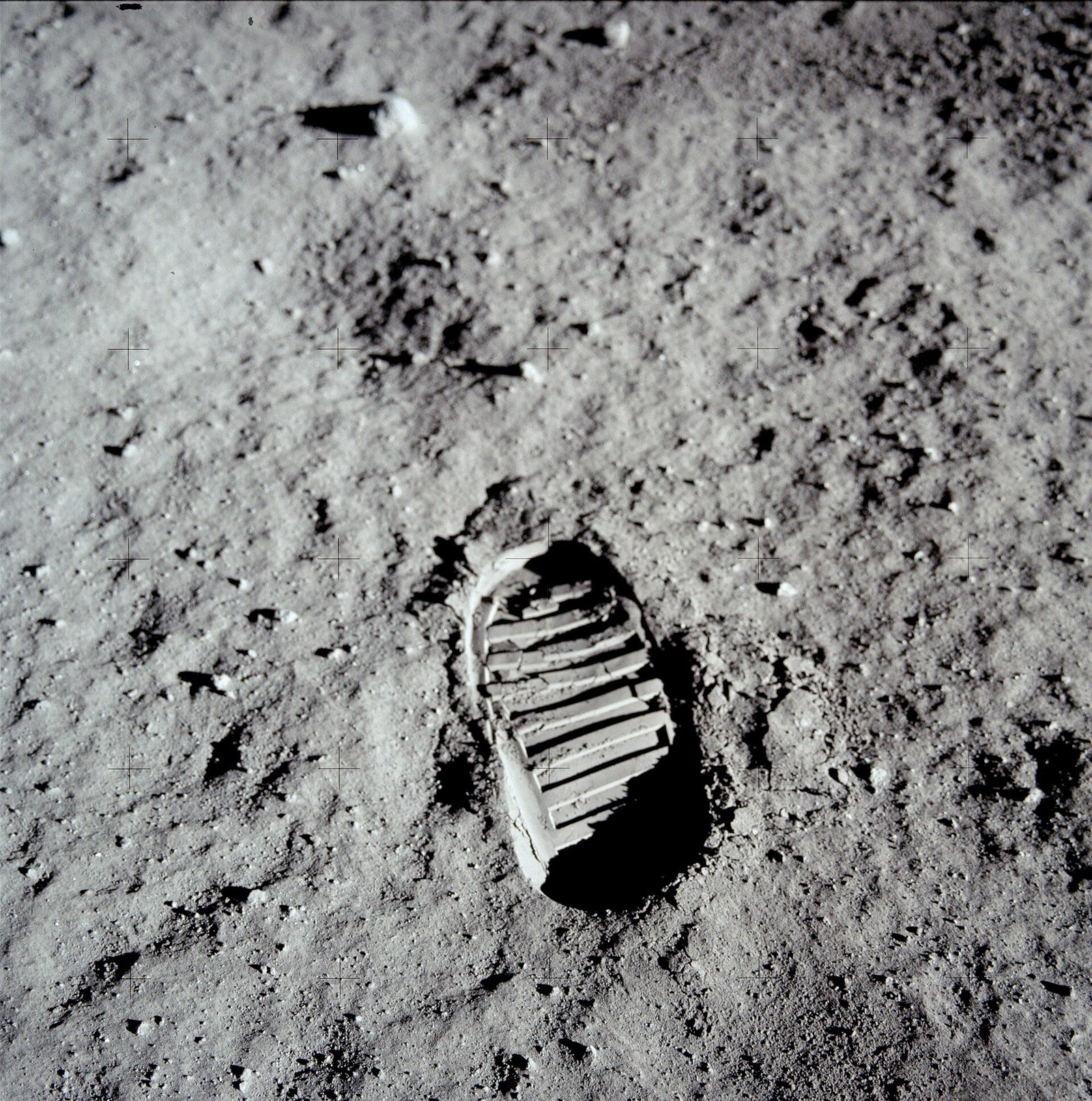
PLATE Nº 33Apollo 11 — a bootprint in lunar dust
PLATE Nº 33 — Tranquility Base. The Moon, which watched every chapter, finally gets a visit. — Source: NASA / Buzz Aldrin · public domain

CHAPTER VIII · THE ONE STILL BEING WRITTEN

Today

And here you are: 4.56 billion years of collapsing stars, colliding worlds, poisoned skies, frozen oceans, exploded body plans, fallen asteroids and risen apes — all of it happening in unbroken sequence so that, this morning, a primate could open a page and scroll through the whole thing. You are not in the story's audience. You are its latest sentence. Write a good one.

DEEP TIME — set in Cinzel, Albert Sans & JetBrains Mono over a procedural planet. Plates are adapted from public-domain and Creative-Commons sources, catalogued and credited beneath each frame. Dates follow scientific consensus and remain, like all good rocks, subject to revision.

— THE END —

4,560,000,000YEARS AGOBEFORE THE BEGINNING